

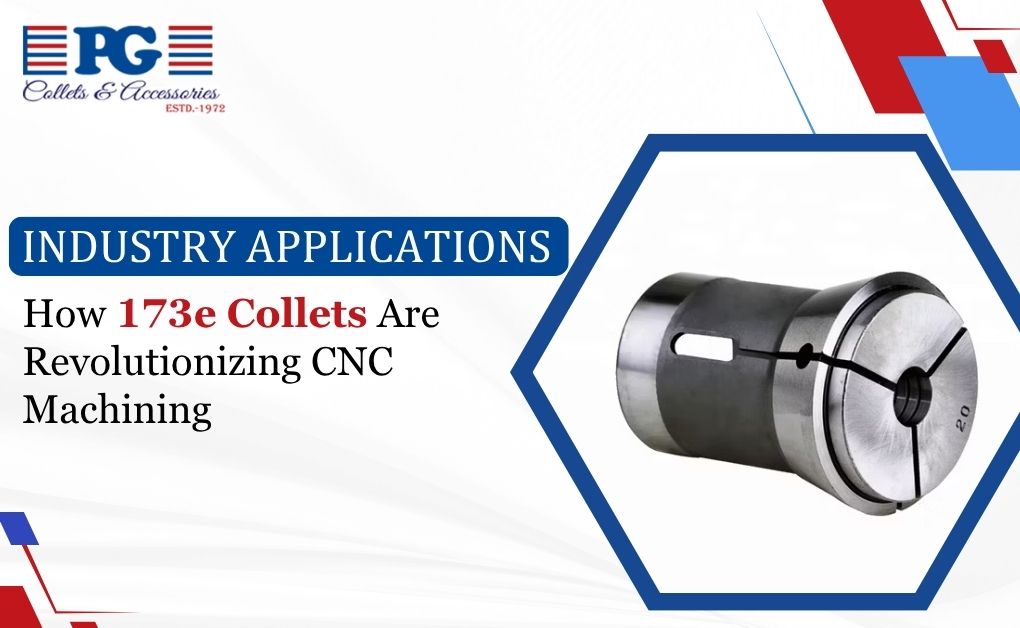
How 173E Collets Are Revolutionizing CNC Machining: A Game-Changer for Modern Manufacturing

The precision manufacturing landscape has witnessed remarkable transformations over the past decade, with cutting-edge workholding solutions leading the charge. Among these innovations, the 173e collet system stands out as a revolutionary force that’s reshaping how manufacturers approach complex machining operations. This advanced collet technology is not just another incremental improvement—it’s fundamentally changing the way CNC shops operate, delivering unprecedented levels of accuracy, efficiency, and versatility.

Understanding the 173E Collet System

The 173e collet represents a significant leap forward from traditional workholding methods. Unlike conventional systems that often require multiple setups and lengthy changeover times, this innovative solution provides superior gripping force distribution across the entire workpiece circumference. The design incorporates advanced metallurgy and precision engineering that ensures consistent performance even under the most demanding machining conditions.

What sets this collet system apart is its ability to maintain micron-level accuracy while accommodating a broader range of workpiece geometries. The enhanced clamping mechanism reduces workpiece distortion, a common challenge that has plagued manufacturers for decades. This improvement directly translates to better surface finishes, tighter tolerances, and reduced scrap rates.

Key Advantages Transforming CNC Operations

Enhanced Precision and Repeatability

Modern manufacturing demands consistency that traditional workholding methods struggle to deliver. The 173e collet system addresses this challenge through its engineered contact surfaces that distribute clamping forces evenly. This uniform pressure distribution prevents workpiece deformation while maintaining the rigidity necessary for aggressive machining parameters.

The repeatability factor is particularly crucial for high-volume production runs. Manufacturers report positioning accuracies within 0.0001 inches across thousands of cycles, enabling lights-out manufacturing with confidence. This level of consistency reduces quality control requirements and minimizes the need for mid-process adjustments.

Versatility Across Applications

One of the most compelling aspects of this advanced collet technology is its adaptability. Whether handling delicate medical components or robust automotive parts, the system adjusts to various material properties and geometries without compromising performance. The design accommodates both round and hexagonal stock, expanding the range of applications for a single setup.

This versatility extends to material compatibility as well. From aluminum and brass to hardened steels and exotic alloys, the collet maintains its gripping characteristics across diverse material types. This flexibility allows manufacturers to streamline their tooling inventory while expanding their machining capabilities.

Comparison with Traditional 5C Collet Chuck Systems

While the 5c collet chuck has served the industry faithfully for decades, the limitations of this traditional system become apparent when compared to modern alternatives. The 5C system, though reliable, typically requires specific collets for each workpiece diameter, leading to extensive tooling inventories and frequent changeovers.

The traditional approach also presents challenges in terms of gripping range and accuracy. 5C collets generally provide adequate performance for standard applications but fall short when precision requirements exceed conventional standards. The newer collet technology addresses these limitations by offering expanded gripping ranges and superior accuracy retention over extended production runs.

Operational Efficiency Improvements

The transition from traditional systems brings immediate operational benefits. Setup times decrease significantly due to the reduced need for specialized tooling and complex adjustments. Operators report setup time reductions of up to 60% when switching from conventional methods to the advanced collet system.

Additionally, the enhanced rigidity allows for more aggressive cutting parameters, reducing cycle times without sacrificing quality. This combination of faster setups and reduced machining times creates a compound effect on overall productivity.

Industry Applications and Success Stories

Aerospace Manufacturing

The aerospace industry’s stringent requirements for precision and reliability make it an ideal application for advanced collet technology. Manufacturers producing critical flight components have adopted these systems to achieve the tight tolerances demanded by aviation standards. The improved surface finishes and dimensional accuracy contribute directly to component performance and safety.

Medical Device Production

Medical device manufacturers face unique challenges combining precision requirements with biocompatible materials. The advanced collet system’s ability to handle delicate workpieces without inducing stress or contamination has proven invaluable in this sector. Components for surgical instruments and implants benefit from the consistent quality and surface integrity this technology provides.

Automotive Component Manufacturing

High-volume automotive production demands both speed and consistency. The enhanced repeatability and faster changeover times have enabled automotive suppliers to meet increasingly demanding delivery schedules while maintaining quality standards. PG Collets has documented significant productivity improvements across multiple automotive applications.

Future Implications for CNC Machining

The adoption of advanced collet technology represents more than just an equipment upgrade—it signals a fundamental shift toward more intelligent manufacturing processes. As Industry 4.0 concepts gain traction, workholding systems that provide consistent, measurable performance become essential components of smart manufacturing ecosystems.

The data generated by these precise systems contributes to predictive maintenance programs and process optimization initiatives. This integration capability positions manufacturers to leverage emerging technologies while maintaining the reliability that production schedules demand.

Conclusion

The revolution in CNC machining workholding technology, exemplified by the 173e collet system, represents a significant advancement for modern manufacturing. By addressing the limitations of traditional methods while providing enhanced precision, versatility, and efficiency, these innovations enable manufacturers to tackle increasingly complex challenges with confidence.

As manufacturing continues evolving toward higher precision requirements and faster delivery expectations, investing in advanced workholding technology becomes not just beneficial but essential for competitive success. The transformation is already underway, and forward-thinking manufacturers are positioning themselves to capitalize on these technological advances.
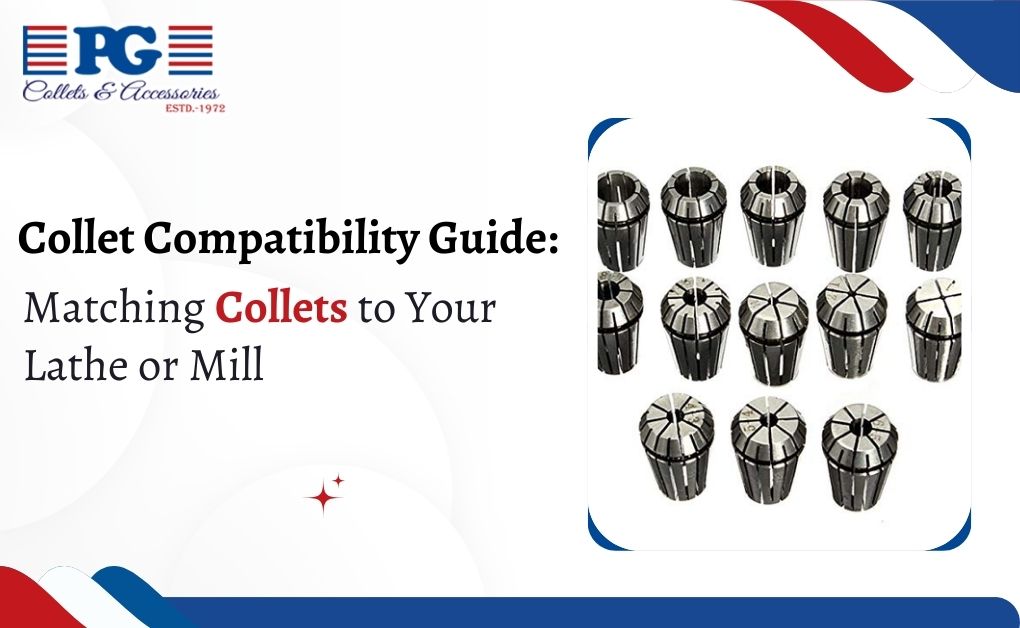
Collet Compatibility Guide: Matching Collets to Your Lathe or Mill

Selecting the right collet for your machining operations is crucial for achieving precision, efficiency, and optimal performance. Whether you’re working with a lathe or milling machine, understanding collet compatibility ensures proper workpiece holding and prevents costly mistakes. This comprehensive guide will help you navigate the essential aspects of collet selection and matching.

Understanding Collet Systems

Collets are precision holding devices designed to grip round, hexagonal, or square workpieces with exceptional accuracy. Unlike traditional chuck systems, they provide uniform clamping pressure around the entire circumference of the workpiece, resulting in superior concentricity and reduced vibration during machining operations.

The effectiveness of any collet system depends heavily on proper matching between the collet, chuck, and machine spindle. Each component must work harmoniously to deliver the precision and reliability modern machining demands.

Types of Collet Systems

Standard Collet Configurations

Different machining applications require specific collet types, each designed for particular holding requirements:

Round Collets: The most common type, ideal for cylindrical workpieces and round stock materials. They offer excellent gripping power and concentricity for standard turning and milling operations.

Hex Collets: Specifically designed for hexagonal stock, these collets accommodate hex bar stock without requiring custom modifications or special setups.

Square Collets: Perfect for square stock materials, providing secure holding while maintaining proper alignment during machining processes.

Emergency Collets: Designed for oversized or irregularly shaped workpieces that don’t fit standard collet configurations.

Specialized Collet Systems

The 5c collet chuck represents one of the most versatile and widely used systems in modern machining. This system offers exceptional flexibility, accommodating a broad range of workpiece sizes and shapes. The 5C system provides reliable holding power while maintaining the precision necessary for demanding applications.

For metric applications, the 173e collet system provides similar versatility with metric sizing. This system is particularly popular in European and international markets where metric measurements are standard.

Compatibility Factors to Consider

Spindle Nose Configuration

Before selecting any collet system, verify your machine’s spindle nose configuration. Common configurations include:

  • A2-series spindle noses
  • D1-series cam-lock spindles
  • Threaded spindle noses
  • Taper mount systems

Each configuration requires specific chuck designs, and mismatching can result in poor performance or equipment damage.

Collet Size Ranges

Different collet systems accommodate varying size ranges. Standard systems typically handle:

  • Fractional sizes from 1/16″ to 1-1/8″
  • Metric sizes from 1mm to 25mm
  • Special sizes for specific applications

Understanding your typical workpiece size range helps determine the most suitable collet system for your operations.

Clamping Force Requirements

Consider the clamping force needed for your specific applications. Heavier cuts require stronger holding power, while delicate workpieces need gentler clamping to prevent distortion. Different collet systems provide varying clamping forces, making proper selection critical.

Machine-Specific Considerations

Lathe Applications

For lathe operations, collets must provide secure holding while allowing for potential workpiece extension. Consider these factors:

Spindle Through-Hole: Ensure the collet system accommodates your spindle’s through-hole diameter for bar feeding operations.

Runout Tolerance: Lathe work demands exceptional concentricity. Select collet systems with minimal runout specifications.

Material Removal Requirements: Heavy turning operations require collets with superior gripping power to prevent workpiece slippage.

Milling Machine Applications

Milling operations present unique challenges requiring specific collet characteristics:

Multi-Directional Forces: Milling generates forces in multiple directions, requiring collets with uniform gripping around the entire workpiece circumference.

Vibration Resistance: The cutting action in milling can create vibration. Proper collet selection helps minimize these effects.

Workpiece Access: Milling often requires accessing multiple surfaces, making collet length and configuration important considerations.

Installation and Setup Best Practices

Proper Alignment Procedures

Achieving optimal performance requires careful attention to installation procedures:

  1. Clean all mating surfaces thoroughly before assembly
  2. Check spindle nose condition for wear or damage
  3. Verify proper torque specifications during installation
  4. Test runout after installation to ensure proper alignment

Maintenance Requirements

Regular maintenance ensures consistent performance and extends collet life:

  • Regular cleaning of collet and chuck components
  • Lubrication according to manufacturer specifications
  • Inspection for wear patterns or damage
  • Replacement of worn components before they affect performance

Troubleshooting Common Issues

Poor Concentricity

If you experience runout issues, check for:

  • Worn collet segments
  • Contaminated mating surfaces
  • Improper installation procedures
  • Spindle bearing problems

Insufficient Holding Power

When workpieces slip during machining:

  • Verify proper collet size selection
  • Check for worn gripping surfaces
  • Ensure adequate clamping force
  • Consider workpiece surface conditions

Conclusion

Selecting compatible collets for your lathe or milling machine involves careful consideration of multiple factors including spindle configuration, workpiece requirements, and application demands. Whether you choose a 5c collet chuck for versatility or a 173e collet for metric applications, proper matching ensures optimal performance, precision, and productivity in your machining operations.

Taking time to understand these compatibility factors and following proper installation procedures will result in improved machining accuracy, reduced setup time, and enhanced overall productivity in your workshop or manufacturing facility.


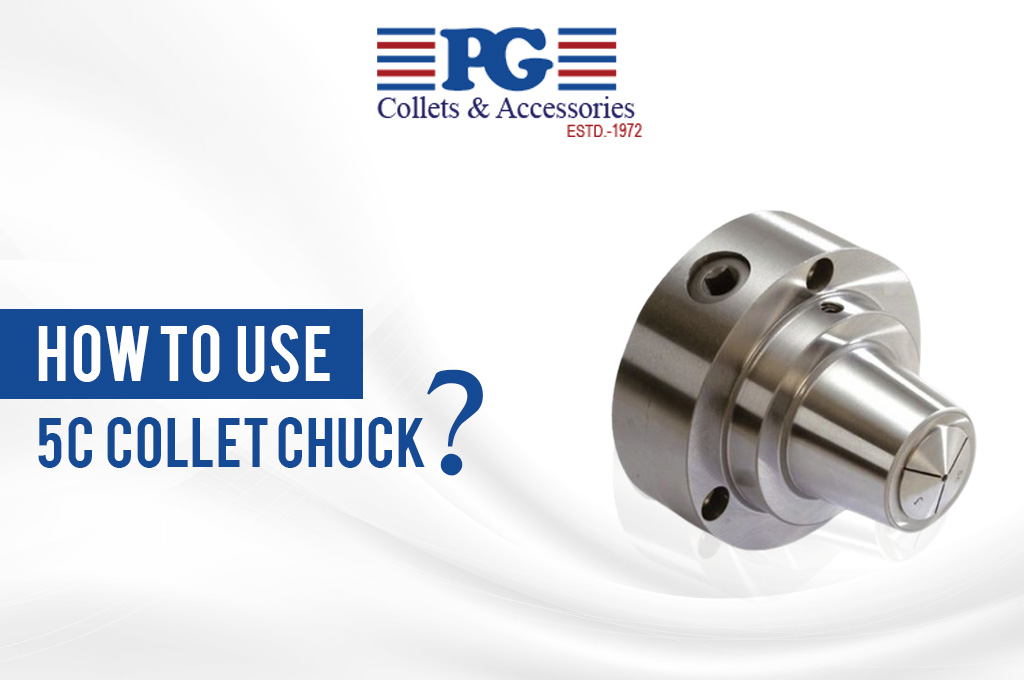
How to Use 5C Collet Chuck? | PG Collets Guide

For various lathe machine operations, 5C Collet chuck is widely used. In general, it works efficiently to deliver bearing diameter with specific measurements. The length should maximize due to its external right-hand millimeter threads. Of course, the 5c Collet must connect with the drawbar and be mainly applicable for heat-treated for a long time. The operation time must be unique and give precision length external approaches.


Usage Of 5C Collet Chuck

1. Spring tempered steel options

In addition to precision grade, 5C Collet Chuck offers smooth operation and much more applications. It entirely depends on the spring tempered steel options. The hardened and grounded accuracy plays a vital role in the application process. Of course, the manufacturing process is easy and, at the same time, gives metals, plastics, and other materials for vivid applications.


2. Helpful in the manufacturing process 

The Collet Chuck provides a cone-shaped sleeve by focusing with workpieces effectively. Of course, it must collect with a quick solution to carry out spindles of lathes, mills, and machine tools. It is considered the best solution and explores additional slots. The 5C Collet provides aesthetic applications within a short time.

 3. The fast and quick clamping action

Of course, 5C Collet provides specific functionalities by clamping action. It is quickly set out a new solution and considers extended run options. The volume production must take a proper measurement of possibilities. The machinery exterior must set out a new volume for more applications. It is helpful for a better machining process within a short time.


4. Accurate Inches 

The Collet manufacturer in India, on the other hand, delivers short length and ground spring measurements. It took place an essential role for measuring the accuracy and resistance option. The functionalities ensure good capacity functions with practical goals. The holding work must explore steel measurements on good inches on overall length.

  • Sturdy design
  • Fast precision
  • Easy fitting


5. Accessible with modifiable Collet and work piece stop

Furthermore, it is typically a good solution and experiences a unique functionality. It will carry out more available options with length measurement. An expanding Collet must take semiconductor and other machinery functionalities. It is helpful for the heat-treated right-hand vote with external threads. It gives an outstanding solution and explores the workpiece stop with length measurement.


Conclusion 

5C Collet Chuck works predominately on various lathe operations from the above discussion. It is excellently designed with the ground for accuracy and resistance. Of course, it works on the centre whole and is ideal for high volume production in precision parts.

Believe it or not, the features of 5C Collet chuck provide aesthetic solutions for various desires. In addition to this, some suppliers are keen to buy it from the authorized manufacturer. The functionalities of 5C Collet Chuck deliver a wonderful experience to explore unique lathe operations.


Our Other Products:


Enquire Now


R8 Collet vs ER Collet: Which One Is Right for Your Application?

When dealing with precision tool holding in machining, choosing an appropriate collet system plays a critical role in accuracy, stiffness, and efficiency. Two of the most widely compared collet forms are the R8 collet and the ER collet. Each has unique advantages based on application. In this guide, we will summarize their differences, strengths, and best use cases to aid you in your decision-making process.

Understanding Collets: A Brief Overview

Collets are workholding tools that hold cutting tools or workpieces in machining processes. Collets offer good clamping force and concentricity for precise performance in milling, drilling, and turning processes.

Most Important Points to Keep in Mind While Selecting a Collet:

  • Tool Suitability – Is the collet suitable for your spindle and tool shank?

  • Grip Capacity – How securely does it grip the tool during heavy loads?

  • Accuracy of Runout – Does it reduce vibration and deflection?

  • Ease of Use – How easy are tools to swap?

Let’s now contrast R8 collets and ER collets in greater detail.

R8 Collets: Features and Uses

What is an R8 Collet?

The R8 collet is a precision collet system that is most commonly used in Bridgeport-type milling machines. It has a threaded rear that screws into the machine’s spindle, creating a rigid and solid hold.

Strengths of R8 Collets

✔ High Rigidity – Direct spindle mounting minimizes vibration.
✔ Simple Design – Fewer parts equal simpler setup.
✔ Cost-Effective – Best for shops with older milling machines.

Disadvantages of R8 Collets

✖ Limited Size Range – Usually only available in fixed sizes (e.g., 1/8″ to 7/8″).
✖ Slower Tool Changes – Manual tightening, as opposed to quick-change systems.
✖ Machine-Specific – Only works with R8 spindle machines.

Ideal Uses for R8 Collets

  • Manual milling applications

  • Repetitive work on Bridgeport mills

  • Severe cutting where rigidity is paramount

ER Collets: Features and Applications

What is an ER Collet?

The ER collet is a universal, spring-type collet applied in CNC machining, lathes, and milling centers. It employs a nut mechanism to squeeze the collet around the tool, providing a greater clamping range.

Advantages of ER Collets

✔ Broader Size Range – One ER collet can fit various tool diameters (e.g., ER-20 handles 1mm to 13mm).
✔ Higher Runout Accuracy – Best for high-speed and precision machining.
✔ Rapid Tool Changes – Supports hydraulic and pneumatic tool holders.
✔ Universal Fit – Suitable for many machines (CNC mills, routers, lathes).

Disadvantages of ER Collets

✖ Less Rigidity Than R8 – Spring tension can cause minor flex with heavy loads.
✖ Requires Proper Torque – Over- or under-tightening can impact grip strength.

Best Applications for ER Collets

  • CNC machining & high-speed milling

  • Precision drilling & tapping

  • Multi-tool operations requiring frequent changes

R8 Collet vs ER Collet: Main Differences

Feature R8 Collet ER Collet
Clamping Style Direct spindle thread Spring compression with nut
Tool Size Flexibility Fixed sizes Adjustable within a range
Rigidity Very high Moderate to high
Runout Accuracy Good (0.005″ typical) Excellent (0.0005″ or better)
Tool Change Speed Slower (manual) Faster (quick-change compatible)
Machine Compatibility Only R8 spindles Universal (CNC, lathes, mills)
Best For Heavy manual milling High-precision CNC work

Which Collet Should You Choose?

Select R8 Collets If:

  • You have a manual Bridgeport-style mill.

  • Maximum rigidity for heavy cuts is necessary in your work.

  • No tool changes are required often.

Select ER Collets If:

  • You have CNC machines or you require quick tool changes.

  • High precision and less runout is a must.

  • You work on changing tool diameters.

For applications needing high-quality collets, PG Collets has dependable solutions for the R8 and ER systems, guaranteeing precision and durability.

Final Thoughts

Both ER collets and R8 collets find utility in machining. The best one to choose depends on your application, machine type, and level of precision you require. If you require tough simplicity, R8 makes a good choice. For versatility and high-speed accuracy, ER collets are the preferred option.


Our Other Products:-

173e collet

5c collet chuck