
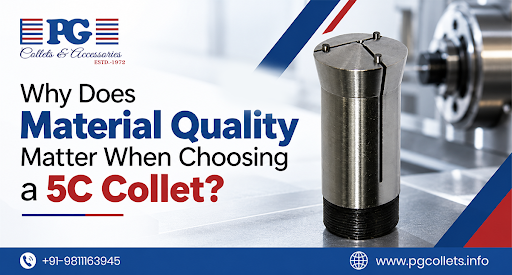
Why Does Material Quality Matter When Choosing a 5C Collet?

For precision manufacturing, a component’s dimensions may be impacted by slight variations in workholding. If the collet wears out too rapidly, does not secure the workpiece properly or if it does not align it properly, it can cause dimensional errors, surface finish problems, and unnecessary production delays. Hence, the quality of materials is certainly an important aspect to consider when selecting a 5C Collet for industrial use.

A 5C collet is a type of collet that is generally used in compatible lathes, grinding machines, and other types of work holding setups to grip cylindrical workpieces securely. But not every collet is as durable, grips or resists wear as much. The type of material used in the manufacture of the collet may affect the performance characteristics of the collet under various operating conditions.

How Material Quality Affects 5C Collet Performance

The physical properties of the material of which a collet is made have a direct effect on the strength, resistance to wear, dimensional stability and ability of a collet to grip a work piece in a consistent manner.

Collets might be subjected to multiple clamping cycles, rubbing, vibration, and contact with metal parts in industrial applications. A suitable material can allow the collet to resist these conditions, and keep its shape and function as intended.

  • Wear resistance: Repeated use can cause the gripping surfaces of a collet to be subjected to repeated wear. Combined with the correct operation and maintenance, materials having suitable wear resistance can help prolong the working time.
  • Positioning stability: When the workpiece is to be precision machined, it is necessary to maintain the same position in the operation. Under normal operating conditions a collet that is maintained in the same shape ensures repeatable results.
  • Grip strength and flexibility: They should have enough grip to hold the part being assembled, and they should close the slotted parts as intended. The correct balance will depend on the design, material and application.
  • Operating Condition resistance: Operating conditions such as heat, friction, coolant exposure and machining forces can have an impact on various materials. The selection of the material appropriate to the specific working environment can help minimize premature wear of the material.

Manufacturers should consider the quality of the material in addition to dimensions, heat treatment, manufacturing tolerances, and machine compatibility.

Why Steel Quality and Heat Treatment Matter

Many of the industrial 5C collets are produced from appropriate alloy or tool steels, which will offer the strength and wear resistance needed for repeated machining operations.

But if you choose steel, it doesn’t ensure good performance. The manufacturing process and heat treatment are also significant factors.

The correct heat treatment can ensure the required hardness and mechanical properties. A too-soft collet can have its gripping surfaces worn out early. When the material properties are an inappropriate match for the design, it can be prone to cracking or other types of damage.

Careful dimensional inspection and precision grinding are also vital. A good quality collet, even if constructed from steel may not function well if it is not dimensioned properly internally, in terms of taper or the gripping surface.

For instance, if you are working with metal shafts in large quantities, a collet that can consistently grip the shaft in the same manner, every time, would be beneficial. To achieve that objective, factors such as material quality, proper heat treatment and precise manufacturing must be taken into account.

Buyers should look at the entire manufacturing process and NOT simply by the material description of a 5C Collet.

When Should You Consider a Brass Emergency 5C Collet?

There’s no one-size-fits-all solution for all workholding applications. Some work involves delicate and polished or easily marked parts which require special attention when clamping.

For some specific applications, a machinable brass workholding part may be desired and a Brass Emergency 5C Collet may be suitable. Specific workpiece dimensions or profiles can be modified using emergency collets, depending on the design and manufacturer’s directions.

Brass is typically less rigid than hardened steel, and may be useful where reducing the likelihood of marking specific work surface is significant. But its usefulness is determined by the gripping force, machining loads, material of the work-piece, and operating conditions.

Here are a few things to keep in mind when deciding on a brass emergency collet:

  • Workpiece protection: Identify if the item has a surface that may be scratched or marked by typical grip surfaces.
  • Machining forces: Check that the material is adequate to the loads and cutting conditions in question.
  • Customization needs: See if the collet can be manufactured to fit the given profile of the work piece.
  • Usage: Take into account the quantity of production and the wear qualities of the material chosen.

Brass is not always the most suitable choice for a delicate part. The final selection should depend on the particular application and on the limitations of the design of the collet.

Choosing a 5C Collet for Second Operation Machines

Second operation machining can be the secondary process performed after the first process, such as producing other features on a component. These can be facing operations, drilling, chamfering, threading or finishing operations.

A 5C Collet Second Operation Machines to offer appropriate workpiece support in order to perform the second operation accurately.

It is important that material quality is correct, as repeated loading and unloading can have an impact on the gripping surfaces of the material. An appropriate collet also needs to be of the correct size for the piece of work and the machine.

A manufacturer that has turned a part but is just about to remove it from the lathe may have to ensure that a part’s existing feature is related to a newly machined surface at a fixed location. The repeatability can be supported by the use of an accurately made collet having suitable material properties.

If using a collet for second operation work, the following will be checked:

  • Ensure the collet is the correct size for the machine and spindle.
  • Check the gripping diameter and tolerances of workpieces.
  • Evaluate the material suitability to workpieces and machining forces.
  • Check the gripping surfaces for wear, damage or contamination.
  • Select a design that will allow for the desired production volume and accuracy.

The checks will eliminate unnecessary setup issues and contribute to a more consistent machining process.

What to Check Before Buying a 5C Emergency Collet

When a standard collet will not have a proper gripping profile for a specific application, a 5C Emergency Collet is frequently chosen. As per the design, it could be adjusted for making it fit a certain part or specialised machining requirement.

When choosing one to buy, consider the bigger picture. Overall value depends on the suitability of the material, the precision of the manufacturing process, the customization needs, and the anticipated life.

Discuss the material specifications, heat treatment (if applicable), dimensional tolerances, and compatibility with your equipment with the supplier. For applications that require application of non-standard components, the drawing or dimensions of the workpiece must be provided accurately.

A regular inspection schedule should be established as well. The performance of workholding can be compromised by any of a variety of factors, including chips, contamination, excessive wear or improper clamping pressure, and regardless of material.

A properly fitted collet and proper maintenance can result in trouble-free operation and fewer unnecessary machining interruptions.

Conclusion

The quality of the material is a key factor in the functionality, longevity and uniformity of the 5C Collet. A combination of appropriate material characteristics, heat treatment, part dimensional tolerances and manufacturing quality are conducive to reliable work holding in precision machining applications.

It is worthwhile to consider all of these factors to ensure you pick a collet that works for you and your actual machining tasks without extra replacement or production delays.

Call to Action

Need some appropriate collets for your machining? Contact PG Collets and discover industrial collet solutions and talk about your workholding needs. Select a product according to machine compatibility, component specifications and application requirements.

Frequently Asked Questions (FAQs)

1. Why does material quality matter when choosing a 5C Collet?

Material quality directly affects a collet’s strength, wear resistance, dimensional stability, and grip. A poor-quality collet can wear out quickly, slip during machining, or fail to hold the workpiece in the correct position. This can lead to dimensional errors, poor surface finish, and unnecessary production delays.

2. What role does heat treatment play in a 5C Collet?

Heat treatment gives the collet the right hardness and mechanical properties for repeated machining. A collet that is too soft can have its gripping surfaces wear out early, while one with poorly matched properties may crack or get damaged. Precision grinding and careful dimensional inspection are equally important for consistent performance.

3. When should I use a Brass Emergency 5C Collet?

A Brass Emergency 5C Collet is a good option when you are working with delicate, polished, or easily marked parts. Brass is generally less rigid than hardened steel, which can help reduce marking on the workpiece surface. However, you should also check the gripping force, machining loads, and workpiece material before choosing it.

4. Why is a 5C Collet for second operation machines important?

Second operation machining includes tasks such as facing, drilling, chamfering, threading, and finishing. A properly sized and well-made 5C collet supports the workpiece accurately, helping new features line up correctly with existing ones. Good material quality also matters because repeated loading and unloading can wear the gripping surfaces.

5. What should I consider before buying a 5C Emergency Collet?

Look at material specifications, heat treatment, dimensional tolerances, customization needs, and compatibility with your machine. For non-standard applications, provide accurate drawings or workpiece dimensions to the supplier. Regular inspection for chips, contamination, and wear will also help keep performance consistent. PG Collets can help you select the right option for your workholding needs.
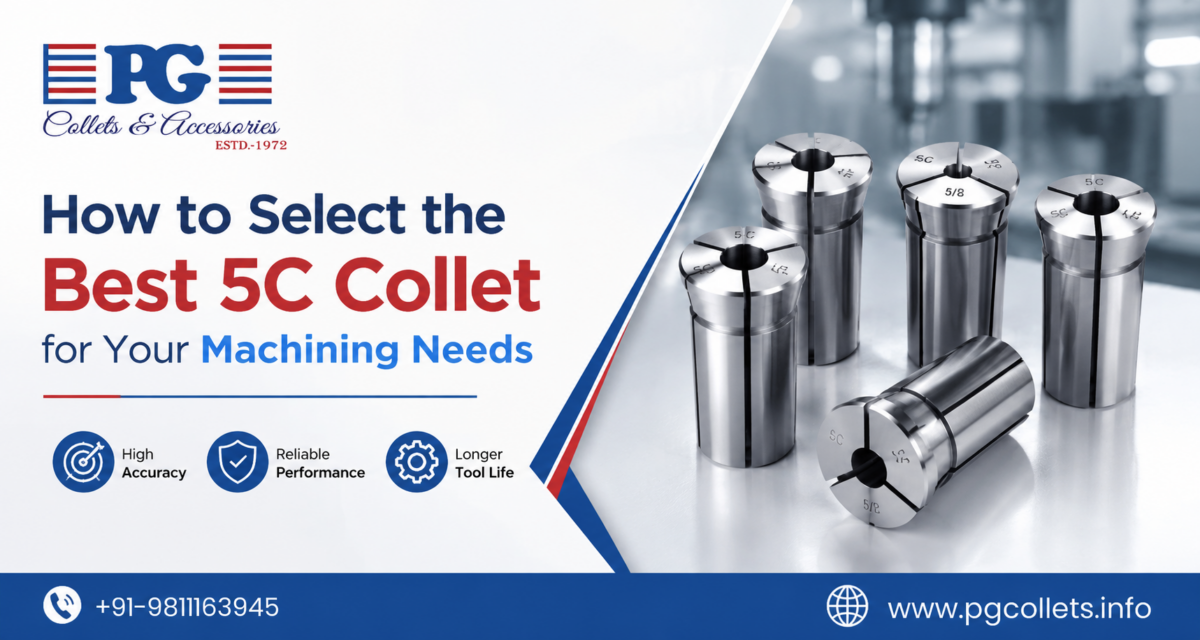
How to Select the Best 5C Collet for Your Machining Needs

Introduction

The right 5C collet can impact the quality, accuracy and efficiency of your machining operations. Regardless of the lathe, CNC machine or milling machine you are using, the collet you use will directly influence your work piece holding ability. If the collet is not of good quality or set up properly, it can cause vibrations, loss of precision and needless tool wear. This is why it is important to know how to choose the best 5C collet for your machining application. This guide provides guidelines to understand important factors that you can consider when making the decisions and ensuring that you get consistent machineability results.

The Importance of Selecting the Right 5C Collet

A 5C collet can be used to hold workpieces such as round, square or hexagonal with high concentricity and good gripping force. It has a secure hold and so is helpful to lessen runout and enhance machining accuracy.

But, not all collets can be used in all applications. The gripping capacity, tolerance and material vary from job to job. The choice of the wrong collet can have an impact on surface finish, dimensional accuracy and production speed.

A good quality collet will enhance your machine spindle’s performance, and prolong the life of your cutting tools.

Selection of 5C Collet – Consideration Factors

1. Workpiece Size

The first step is to select the correct size of collet required for the work piece. The correct size of the collet will give the greatest grip and will limit the movement during machining.

Do not use too large or too small a collet as it decreases clamping efficiency and can cause damage to the collet and/or the piece being clamped.

2. Material Quality

The material used in making a 5C collet is of great importance to its durability. Hardened alloy steel is often used because of its high wear resistance and ability to hold accuracy for long periods.

Good materials also provide even clamping pressure, even after multiple processing cycles.

3. Accuracy Requirements

Precision is required in varying degrees for different industries. For aerospace, automotive or medical parts, opt for precision-ground collets that have a low runout.

When precision is not a critical factor, standard precision collets can offer acceptable precision and can be used to machine a variety of parts at a reasonable cost.

4. Type of Application

Consider your most frequent parts.

  • Round stock
  • Hexagonal stock
  • Square stock
  • Special-shaped components

There are specialist collets available from many manufacturers, which will allow for higher holding power with the same precision.

A High Quality 5C Collet Should Have the Following Features

Not all collets will be made to the same quality. A good 5C collet will usually have one or more of the following characteristics to enhance machining performance.

Look for:

  • Precision-ground surfaces
  • Excellent concentricity
  • Heat-treated construction
  • Strong gripping force
  • Long service life
  • Corrosion-resistant finish
  • Consistent dimensional accuracy

These features contribute to the repeatability of machining results and minimize machine downtime.

Moreover, a well established manufacturer will have higher control measures that will assure good quality control and consistent performance in every manufacturing lot.

Common Pitfalls of Purchasing a 5C Collet

Targeted at beginners of the 5C Collet, this article examines common pitfalls of purchasing a 5C Collet.

Some machinists only consider the cost of a machine, but this approach may not maximize productivity and replacement expenses.

Some of the typical missteps are:

  • Purchasing low quality collets that have poor tolerances
  • Ignoring runout specifications
  • Using an incorrect collet size
  • Not checking collets for wear or damage
  • Using two or more different collets for the same workpiece size

It’s also important to inspect regularly and maintain your collets properly to lengthen their lifespan. Properly clean the collet after every machining cycle and store it properly to avoid rust and contamination.

To Get the Most Out of Collet, Use the Following Tips

Even the best collet will fail to function properly if it is not maintained properly.

Follow the following simple practices:

  • Wipe down the collet and spindle prior to installation.
  • Use the recommended torque to tighten the collet.
  • Change worn or damaged collets as soon as possible.
  • Keep collets in a clean and dry place.
  • Always use the right size of the collet for the correct work.

These tiny maintenance tips can make a huge difference in manufacturing accuracy and stave off any unwelcome production problems.

Conclusion

Choosing the correct 5C collet involves a bit more than just size matching. It is important to take into account material quality, machining precision, type of workpieces, durability and reputation of the manufacturer before you buy one. A good collet provides accuracy, longer tool life and more efficient machining. A good 5C collet, properly suited to the application will help ensure consistent performance and minimise downtime and maintenance.

Call To Action

In search of high quality 5C collets for great accuracy and durability? Call PG Collets today to discover the best solution for your needs and wants. Our precision-engineered collets are designed to help you achieve consistent performance and long-lasting reliability. Check out our website and select the appropriate collet for your next machining application.

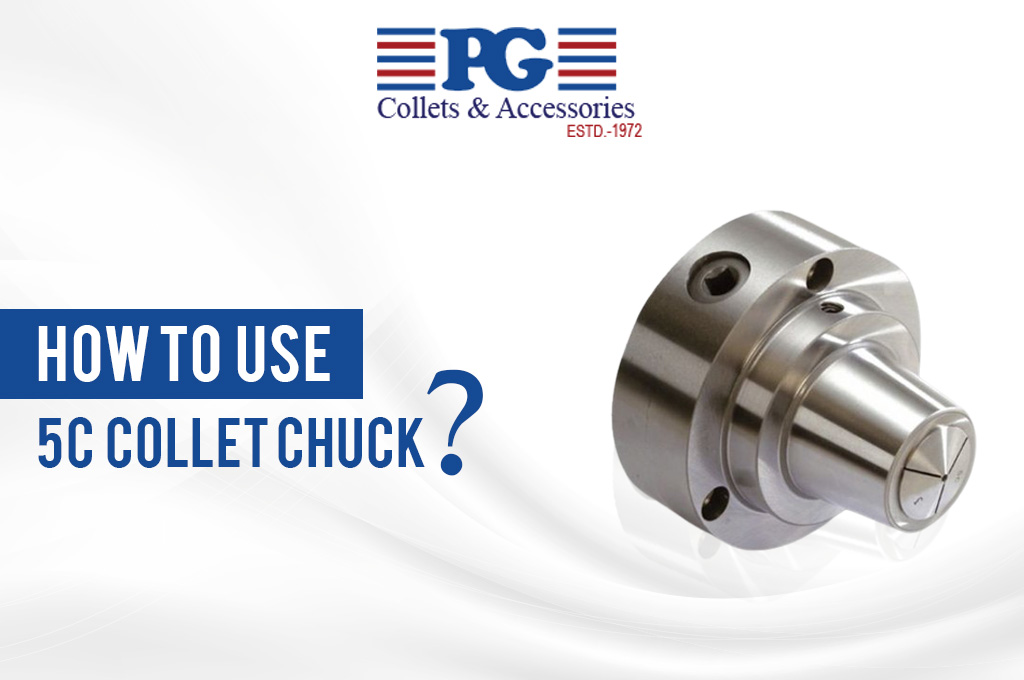
How to Use 5C Collet Chuck? | PG Collets Guide

For various lathe machine operations, 5C Collet chuck is widely used. In general, it works efficiently to deliver bearing diameter with specific measurements. The length should maximize due to its external right-hand millimeter threads. Of course, the 5c Collet must connect with the drawbar and be mainly applicable for heat-treated for a long time. The operation time must be unique and give precision length external approaches.


Usage Of 5C Collet Chuck

1. Spring tempered steel options

In addition to precision grade, 5C Collet Chuck offers smooth operation and much more applications. It entirely depends on the spring tempered steel options. The hardened and grounded accuracy plays a vital role in the application process. Of course, the manufacturing process is easy and, at the same time, gives metals, plastics, and other materials for vivid applications.


2. Helpful in the manufacturing process 

The Collet Chuck provides a cone-shaped sleeve by focusing with workpieces effectively. Of course, it must collect with a quick solution to carry out spindles of lathes, mills, and machine tools. It is considered the best solution and explores additional slots. The 5C Collet provides aesthetic applications within a short time.

 3. The fast and quick clamping action

Of course, 5C Collet provides specific functionalities by clamping action. It is quickly set out a new solution and considers extended run options. The volume production must take a proper measurement of possibilities. The machinery exterior must set out a new volume for more applications. It is helpful for a better machining process within a short time.


4. Accurate Inches 

The Collet manufacturer in India, on the other hand, delivers short length and ground spring measurements. It took place an essential role for measuring the accuracy and resistance option. The functionalities ensure good capacity functions with practical goals. The holding work must explore steel measurements on good inches on overall length.

  • Sturdy design
  • Fast precision
  • Easy fitting


5. Accessible with modifiable Collet and work piece stop

Furthermore, it is typically a good solution and experiences a unique functionality. It will carry out more available options with length measurement. An expanding Collet must take semiconductor and other machinery functionalities. It is helpful for the heat-treated right-hand vote with external threads. It gives an outstanding solution and explores the workpiece stop with length measurement.


Conclusion 

5C Collet Chuck works predominately on various lathe operations from the above discussion. It is excellently designed with the ground for accuracy and resistance. Of course, it works on the centre whole and is ideal for high volume production in precision parts.

Believe it or not, the features of 5C Collet chuck provide aesthetic solutions for various desires. In addition to this, some suppliers are keen to buy it from the authorized manufacturer. The functionalities of 5C Collet Chuck deliver a wonderful experience to explore unique lathe operations.


Our Other Products:


Enquire Now


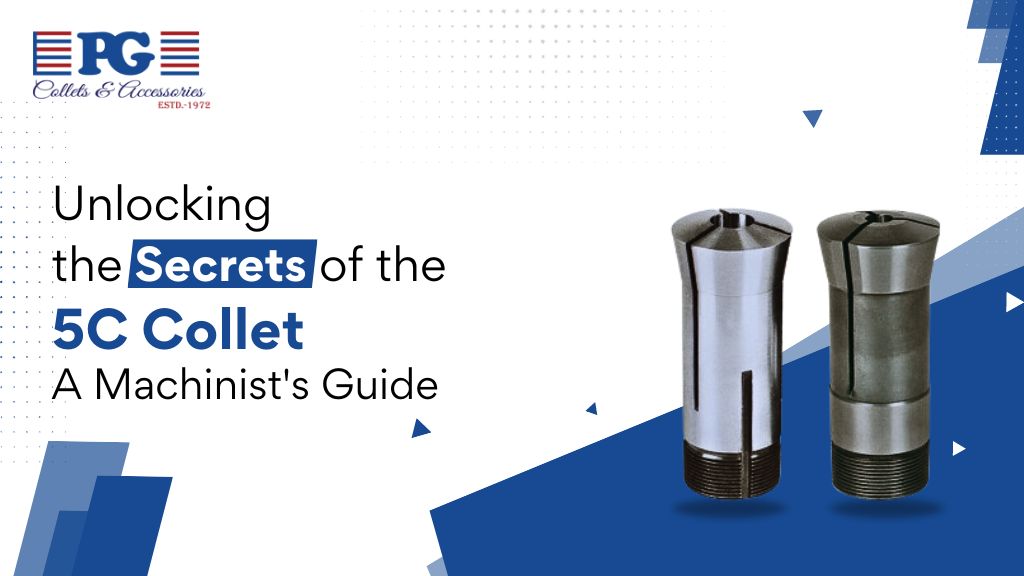
Unlocking the Secrets of the 5C Collet: A Machinist’s Guide

Introduction to the 5C Collet

The 5C collet is a fundamental tool in the arsenal of machinists, offering versatility, precision, and efficiency in various machining operations. Understanding the intricacies of the 5C collet is essential for maximizing its potential and unlocking its full range of capabilities. In this comprehensive guide, we’ll delve into the nuances of the 5C collet, exploring its design, applications, and best practices for optimal performance.

Understanding the 5C Collet

What is a 5C Collet?

A 5C collet is commonly used to hold workpieces during milling, turning, securely grinding, and other machining processes. It features a tapered design with internal threads that match the external lines of a drawbar, allowing for quick and easy installation and removal of workpieces.

Design and Construction

5C collets are typically made from high-quality materials such as steel or brass, ensuring durability and longevity in demanding machining environments. The internal surfaces of the collet are precision-ground to provide a secure grip on workpieces, while the external taper facilitates smooth insertion into the collet holder or spindle.

Key Features and Benefits

  • Versatility: 5C collets are available in various sizes to accommodate multiple workpiece diameters, making them suitable for various machining applications.
  • Precision: The tapered design of 5C collets ensures concentricity and repeatability, allowing for accurate machining with minimal runout.
  • Quick Changeover: With their simple yet effective design, 5C collets enable rapid changeover between different workpieces, minimizing downtime and increasing productivity.
  • Compatibility: 5C collets are compatible with various collet chucks, collet closers, and other work-holding accessories, providing flexibility and adaptability in machining setups.

Applications of the 5C Collet

Milling Operations

In milling operations, 5C Collet are commonly used to secure round or hexagonal workpieces for machining operations such as drilling, milling, and slotting. The precision and reliability of 5C collets make them ideal for holding workpieces that require tight tolerances and fine surface finishes.

Turning Operations

In turning operations, 5C collets grip cylindrical workpieces securely during machining processes such as turning, facing, and threading. The concentricity and repeatability of 5C collets ensure consistent results and minimize the risk of part slippage or distortion.

Grinding Operations

In grinding operations, 5C collets are a reliable means of holding workpieces for precision grinding surfaces, diameters, and contours. The rigidity and accuracy of 5C collets make them well-suited for achieving tight tolerances and fine surface finishes in grinding applications.

Tips for Using 5C Collets Effectively

Proper Installation

Ensure that the 5C collet is clean and free from debris before installation. Insert the workpiece into the collet until it makes contact with the bottom of the cavity, then tighten the drawbar or collet closer to secure the workpiece in place.

Correct Collet Size

Select the size of a 5C collet that matches the diameter of your workpiece. Using an improperly sized collet can result in poor gripping force and compromised machining accuracy.

Regular Maintenance

Inspect 5C collets regularly for signs of wear, damage, or deformation. Replace worn or damaged collets promptly to maintain optimal performance and prevent machining errors.

Conclusion

In conclusion, the 5C collet is a versatile and indispensable tool for machinists, offering precision, reliability, and efficiency in various machining operations. By understanding the design, applications, and best practices for using 5C collets effectively, machinists can unlock the full potential of this essential workholding solution and achieve superior results in their machining endeavours. Whether you’re a seasoned professional or a novice in machining, mastering the secrets of the 5C collet is critical to success in precision manufacturing.

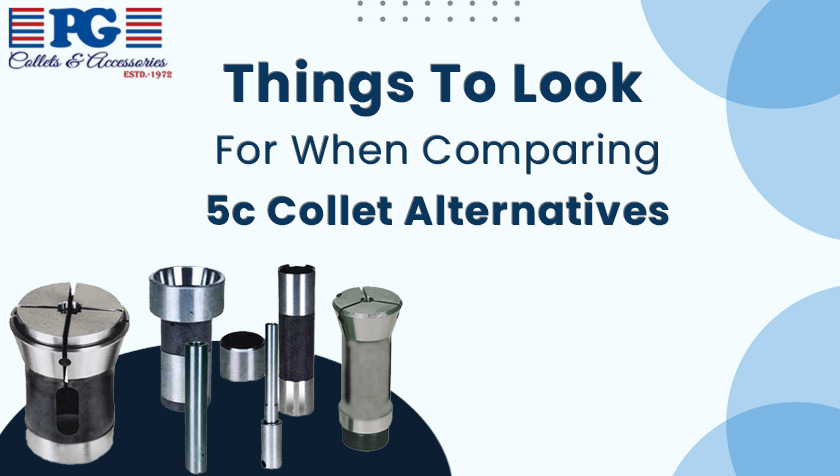
Things to Look for When Comparing 5c collet Alternatives

Collets are useful technical tools to keep your working equipment in place while you furnish your machinery workload. Collets are moreover a necessary tool or rather an intrinsic instrument in machinery to help in smooth working. There are many variants of collets, one of which is the 5c emergency collet. 5c emergency collets are amicable and may be boring to find out individual elements’ depth, taper, and dimensions. Collets are necessary to hold and protect high-speed running and heavy-pressure equipment. 


5c emergency collets are chosen once since they can be rebored several times according to the need of equipment and workload. Gripping is the primary role of a collet, and this variety of collets is most precise in its work. Detailing is such that it can be rebored to significantly alter the grip according to the given task. 


How choose the best collet according to your machinery? 

It can be a tedious task to look for the right fit. Since each piece of machinery and equipment has its own bearings and works depending upon workload and pressures, it is essential to choose the right collet to keep the equipment in place. Moreover, smooth and efficient functioning is also a function of the collet. Thus to optimize your work one must understand the difference in collets and choose the perfect piece. 


  1. Customization 

collets are essential parts of machine bearing and thus should be precisely taken care of. To choose the right fit for your machinery, one must look for the customization that a collet provides. Having machinery that has to be used in various fields and surfaces simultaneously needs a customizable collet. Such collet selection can be best done by choosing the 5c emergency collets. These are customizable in the sense, they can be adjusted according to the diameter of different equipment. These can be tailored several times depending on surfaces and their use. However, if the equipment is bound to be used in the same way for every turn, then one can seek other collets like R8 collets or step collets. emergency collets are made of machinable materials such as steel, brass, or nylon so you may customize them to your needs.

  1. Variety of equipment 

collets are chosen based on what type of industry you want to employ them into. An industry with repetitive work would require strong and same collets to have smooth function however an industry with relatively different work would require adjustable collets. 5C emergency collets are constructed to be well-suited for the ongoing production of high-precision components and items. To check for the right variant of the collet, one must differentiate its use in industries like woodworking, metalworking, combustion engines, or machinery like semiconductors. 

  1. Surface to use the machinery 

be sure of which alternative of collets to use, one must compare the surfaces. If surfaces are heavy and resistant to damage easily the machinery can be fitted with a variety of collets like R8 or ER collets. If surfaces are prone to damage then recommended variety of collets is 5C emergency collets. These collets are used when you must safely grasp the assignment in order to avoid damaging the surface.

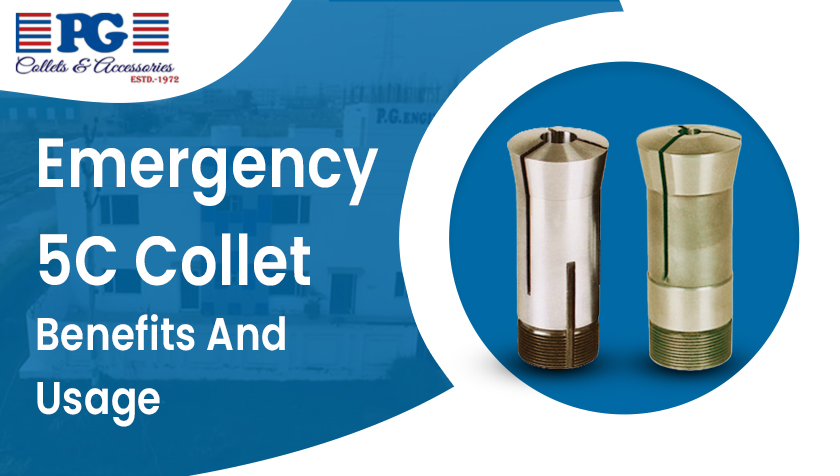
Emergency 5C Collet Benefits And Usage

Have you been looking for an emergency 5c collet for your machinery? Want to know more about its benefits and usage? If yes, you have landed on the right page; here, you will get all the required information on 5c-type emergency collets. 

What Is The 5c Emergency Collet?

A collet is like a collar or a band used to hold a tool or a workpiece in a central position tightly to help it from rotating. It has various mechanical applications and is used within industries. Their usage depends on their types, depending on the machine to be put on.

A 5c emergency collet is widely used for lathes and millwork for metalworking applications. They provide speeding up of the setup and have a hollow tube shape that allows them to hold longer and cylindrical workpieces. 5c collets have a much stronger grip than a standard 3-jaw chuck, making them a better alternative for providing concentricity. They come in brass, nylon, and machinable steel, which can be chosen according to one’s requirements. 

What Are The Benefits Of Using  5c Collet? 

5c type collets are a popular choice in the industries and are chosen over other types of collets for the following benefits;

  1. 5c collet chuck is repeatable and easy to use. 
  2. They can be used to feed bar stock which speeds up the work process. 
  3. They provide the benefit of reliable and strong clamping.
  4. They provide 360-degree support for the tool. 
  5. 5c collet can be used to hold any odd-shaped or round object. 
  6. They provide a strong grip.
  7. 5c-type collets are made of strong and durable steel to be used for a longer period of time. 
  8. Provides precise centering 
  9. Resistance against being untightened.

5c Collet Application

5c collet chuck has a wide range of applications. Let us see them in detail. 

  • Metalworking- 5c type collets are mainly used in lathes and millworks, as they provide precise and repeatable centering and axial concentricity. 
  • Woodworking- They are often found in drill presses and similar cutting devices. 
  • Craft Hobbies- 5c collet is also used by hobbyists, architects, graphic artists, etc. They are used in X Acto or similar kinds of knives to hold the blade. 

Final Verdict 

5c collet is widely used in machine engines for holding tools that require gripping by tapering the outer corners. They are highly useful in various industries, and if your business requires 5c collet chuck, many companies provide them at reasonable prices. You can check their prices online and make your estimate. We hope our article provided you with enough information on 5c-type collets and their benefits and usage and proved to be beneficial for you.

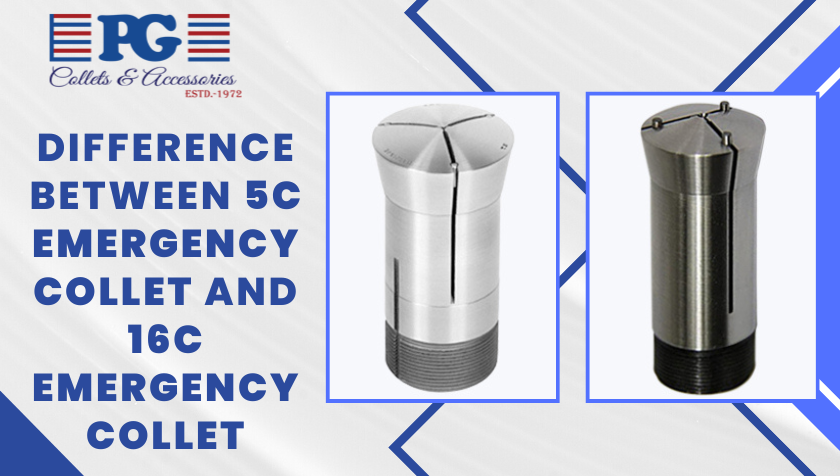
What Is The Difference Between 5c Emergency Collet And 16c Emergency Collet?

Are you searching for the best collets for your business but confused about the 5c emergency collet and 16c emergency collet? If yes, then here is the solution. Both the collets have different purposes according to their shape and their usage. We have mentioned the complete information about both types of collates and the difference between them. So, stay tuned with us, and let’s start with the definition of the collet.

What Is A Collet?

Collets are a kind of chunk that is designed to hold a round thing or clamp on the object to make it steady. They are mostly used to protect the sharp cutting equipment and workpieces that are used at high speed. These collets use clamping force to hold the component with great pressure and avoid chunking of the materials.

There are mainly two types of collets, i.e., Internal collets and external collets. The Internal collets offer a truncated-shaped arrangement that is drilled first and threaded to the centerline from end to end. And the external collets have a tube-shaped surface where it holds the cutting pieces inside it.

In this article, we have discussed 5c emergency collet and 16c emergency collet, their uses, and the differences between them. So, let’s start with the definition of 5c and 16c emergency collates to have a better understanding. Read more: Understanding 5c collet & 16c collet

What Is The 5c Emergency Collet?

5c collets are of various types, among which emergency collets have been mostly used recently. A 5C emergency collet is an internal type of collet that is used to observe curved, hex, or right-angled, providing grip work equipment or workpieces. These have built-in pins to protect the collet from unblocking and maintain the steadiness of the tool. These collets can be used easily and can bore the figure, dimensions, taper, and provide depth to a specific element. Read more: 5C collets and their Benefits, Features, and Uses

What Is The 16c Emergency Collet?

While 16c emergency is external collets that are available in three types, it is a system of chunks that tighten up, applying a clamping force throughout the item. The equipment is stuck inside the collet and clamped from the collar by holding and gripping it safely in place. These collets are specifically used in fast drilling or stepping out to the accurate dimension with the help of minor pilot holes. Read more: What Are The Best Advantages Of 16C Collet

Difference Between 5c Emergency Collet And 16c Emergency Collet

5c Emergency Collet

16c Emergency Collet

5c emergency collet has a full size of 1-1/16”. 16c emergency collet has a full size of 1-5/8″.
5c has a 2-3/16-10 thread nose known as Hardinge thread that can use the steps chunks.
Even 16c has step chunks of the same size as 5c, but it needs a 5A spindle mount on the front face to bolt the closing ring.
These collets are used in boring, provide correct dimension, taper, and obtain the depth of the surface.
16c is mainly used in drilling and stepping the accurate dimension of the element.
5c emergency collets are utilized in woodworking, metalworking, craft hobbies, interior combination engines, and semiconductors.
With its equipment, it is only used in woodworking and metalworking.

Bottom Line

Both 5c emergency collet and 16c emergency collet are widely used in manufacturing industries. Both the collets are versatile and can be used in various places according to the customer’s needs. If you are looking for high-quality 5c collets and 16c collets, you can purchase them from PG collets. This company has been serving in this industries 1972 and made a name as the most reputed company in the Indian market. All its products are certified as per International standards like DNS.

Related Post: What Are The Difference Between F Series Collets And 5C Collets?

Related Post: What is the Difference Between a 3J and 16C Collet Chuck?

Related Post: How to Use Emergency Collets & Their Benefits

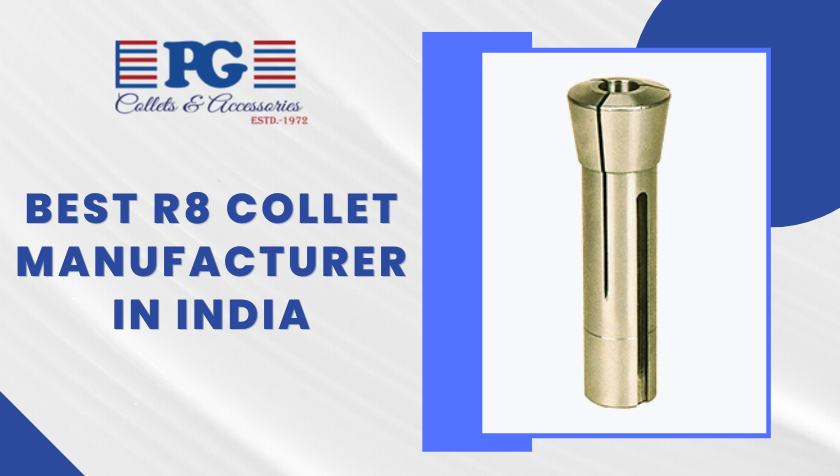
Best R8 Collet Manufacturer In India?

Collects are a very important mechanical tool for industries using the machines like CNC and milling. These machines use sharp workpieces that are used to cut and shape hard substances like metals. At this stage, R8 collect is used to hold these sharp pieces in one place and provide safety to the workers.

Looking at this requirement, many companies need a good quality r8 tool for their manufacturing. And many companies are available in India that claim to offer the best quality collet. But it’s very hard to select the best; below are some key factors to choosing the r8 collet manufacturer in India.

Key Factors While Selecting The R8 Collect Manufacturer In India

Choosing a manufacturing unit for the machinery used in manufacturing industries is a task of responsibility. And multiple factors are considered to select the best option available in the market. If you don’t know how to identify the manufacturer that provides the best quality r8 collect, then we have some suggestions while considering. 

R8 Collet Manufacturer Having A Global Reach

The first factor that you should consider for the company is it should have a global reach. Having an International trade shows the brand value of the company, and it can easily be trusted. Internationally traded collets provide reassurance to the clients and tend to provide quality products.

Provide Customizable Options According To The Client’s Need

An R8 collet is used in different types of machines according to their workload and usage. So, clients prefer the manufacturer that provides a wide range of customization as per their needs and demand. Choose the collect manufacturer capable of delivering a large variety of customizable options as per the usages.

Focused On The Quality Of The Product

As far as customization is required, quality is also considered an important factor of the product. A good quality collet can improve the productivity of the machine by holding the work tool effectively. And the quality of the product is trusted when it stands with all specifications of the ISO, proving the strong credibility of the product.

Experience And Improvisation Matters

Last but not least is the experience and the improvisation of the R8 collet manufacturers in India and even abroad. Experience is the thing that comes with several years of improvement in the work and the product. The most renowned companies have been working for almost 20 to 30 years in the industry and have built trust in the market. Look for companies that have enough experience in their field and study them before choosing your ideal manufacturer.

Bottom Line

If you are looking for the best collet manufacturer in India, then the PG collet can be your choice. PG Engineers is a brand that has been working in India since 1972 and has gained a good reputation in manufacturing collets. It follows all the features that can be considered to measure the best manufacturer in India and even abroad.

Related Post: Quality Collets Manufacturers and Exporters in India and Abroad

Related Post: How to Find the Top Custom Collet Manufacturer in India

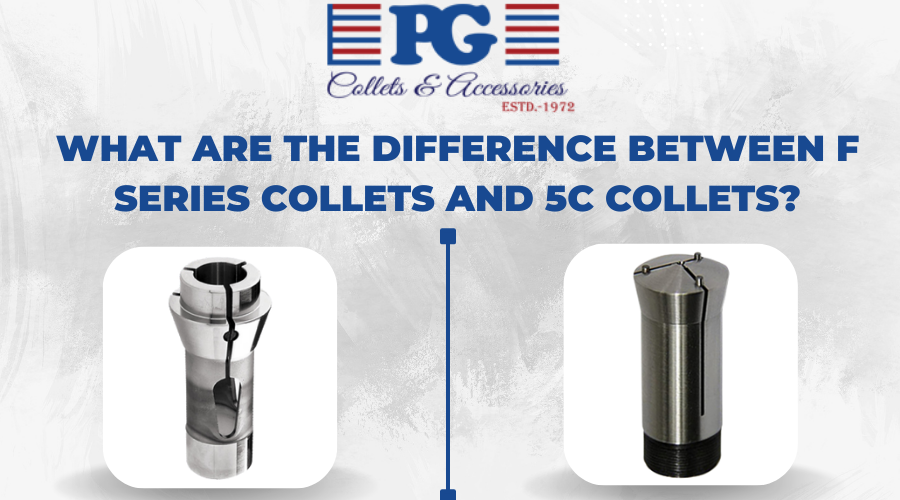
What Are The Difference Between F Series Collets And 5C Collets?

The F series and 5C collets intend to retain round stock material in a lathe, but several essential distinctions must consider. This blog article will review the primary differences between the F series and 5C collets.

About 5C collets

5C collets are the industry standard for lathe and millwork. It handles cylindrical stock with a diameter of around 1′′ (25 mm). Without any problems, a 5c collet may give excellent concentricity to speed up setup over three jaw chucks.

The 5C collets are handy and widely available in metric and inch sizes. A wide variety of collets may use with conventional 5C collet equipment, rods, and other manufacturers’ 5C and R8 equipment.

The regular ground and hardened 5C and R8 collets are built with comparable high-quality standards made into various things. Certain well-known vendors may provide you with the most recent changeable collect and the workpiece stop. Read more: What are 5C collets and their Benefits, Features, and Uses?

About F Series Collets

F Series collets are created with the aid of specific collet steel. They are available in various lengths, ensuring you experiment with the proper collets and meet extra comfort. It has a small or broad clamping range with internal pads.

These F series collets are very secure and precise, providing greater comfort during installation and excellent grip. Some typical chucks assist in projecting the tool beyond the chick and have a little effect on overall stiffness.

These internal pads are often created with the replacement option, which provides extra advantages to the product in an excellent method. 

You may locate numerous sizes on the market and make your purchase accordingly regarding usage in various processes. It is crucial to put it through its paces in your workflow before relying on it. Read more: Uses of F-Series Collets

The Difference Between The 5C And F Series Collets

  • The size range that each can handle is one of the most notable variations between the F series and 5C collets. The F series collets have a substantially more comprehensive size range, ranging from 3/16″ to 1-1/4″. 5C collets, on the other hand, have a narrower range ranging from 1/8″ to 1/2″.
  • Another significant distinction is the degree of grip provided by each style of the collet. The serrated jaws of the F series collets grab the material more securely, making them excellent for retaining tiny, delicate parts.
  • Smooth jaws on 5C collets give a less forceful grip, making them ideal for more extensive components that don’t need as much accuracy.

In general, F series collets are more costly than 5C collets, R8 collets, and 16c collets. This is because they are composed of higher-quality materials and need more accurate machining.

Conclusion

So, what kind of collet is best for you? It depends on the material and the amount of accuracy you want. You should utilize an F series collet when dealing with tiny, fragile parts: collets and their applications. You can contact PG Collects the best custom collet manufacturer, if you need high-quality 5C or F series collets.

You May Also Like: What is the Difference Between a 3J and 16C Collet Chuck?

You May Also Like: What Are The Uses Of Feed Fingers In Industrial Applications?

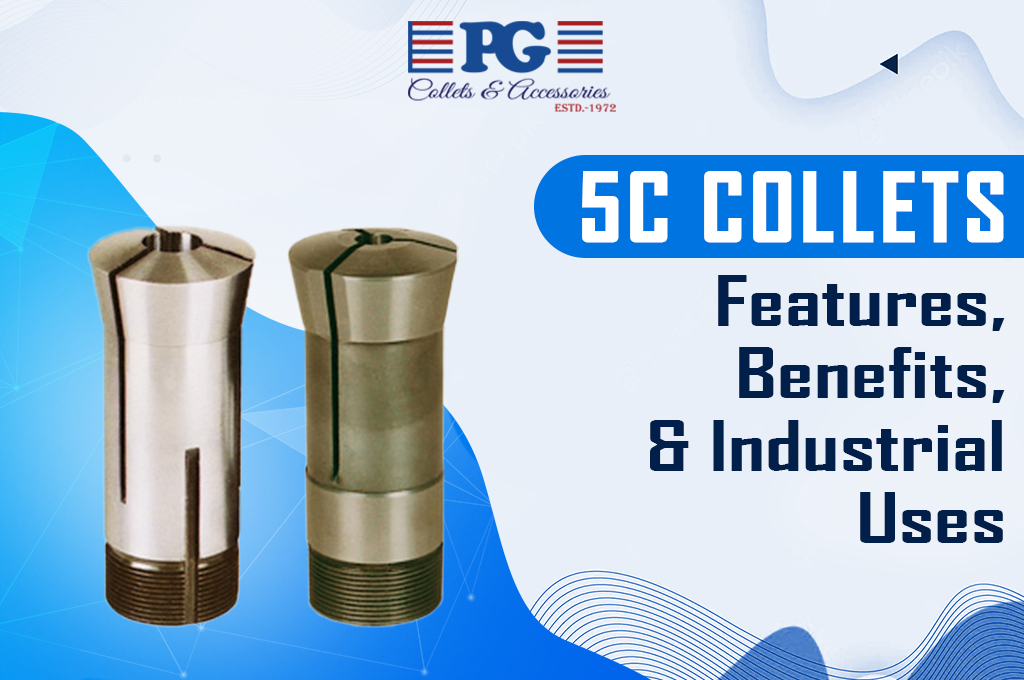
What are 5C collets and their Benefits, Features, and Uses?

Do you want to know about 5C collets? Want to explore their uses effectively? Then this guide can let you understand the concept easily.

In general, 5C collets are the famous standard for lathe and millwork. It is used to hold the cylindrical stock of around 1″ (25 mm) diameter. 5c collet can provide exceptional concentricity to speed up setup than three jaw chucks without any issues.

Benefits and Features of 5C Collets

The benefits and features of 5C collets are:

  • Extraordinary steel for lengthy wear lifetime
  • Precision grade
  • Tools accessible
  • Hardened and ground
  • Inch and metric dimension
  • Accessible with workpiece stop and modifiable collet
  • Useful with most 5C and R8 equipment.

Working on lathe collets

Generally, a collet is the subtype of chuck that can quickly form the collar around the object to occur. Then it will apply a strong clamping force on the object after tightening. It can be helped by tapering the outer collar. Finally, lathe collets are useful for holding the tool or workpiece.

Impact of 5C collet chuck

The 5C Collet Chucks are best for small parts turning, drilling, facing, grinding, boring, and milling process on center lathes, milling machines, grinding machines, and indexers.

An effective process of 5C collets

The 5C collets are useful and highly accessible in metric and inch dimensions. You can use the wide range of collets with standard 5C collet equipment, rods, and other producers’ 5C and R8 equipment.

The typical ground and hardened 5C and R8 collets are entirely made with similar top-notch standards made into a wide range of items. Certain popular suppliers can offer you the latest modifiable collet along with the workpiece stop.

Then such workpiece stops are combined with the collet, and collet stops are accessible as the add-on to the nearby air collet or collet. But the 5C collet set can be effectively used in a wide range of 5C collets chuck, collet actuators, and exactness spindles.

You can also use such collects in 5C collets equipment, other producers’ 5C spindles, and much more. Certain collets are specifically made for precision work holding application that requires gripping the workpiece on the outdoor diameter.

You can use those collets with both pneumatic and hydraulic actuators. It has been signified with the inexpensive rate and some other extraordinary machining techniques for machining centers, grinders, milling engines, lathes, and much more. 

Final verdict

From the scenario mentioned above, you now know about 5C collets and their uses. If you want high-quality 5C collets, you can get in touch with PG Collets’ custom collet manufacturer right now. We are leading experts to offer you a better product at a reasonable rate. 

Related post: What is Collet Chuck and Types of Collet Chucks?

Related post: Collet Sleeves And Their Uses

Related post: An Ultimate Guide To Buy Master Sleeve Of Collets