

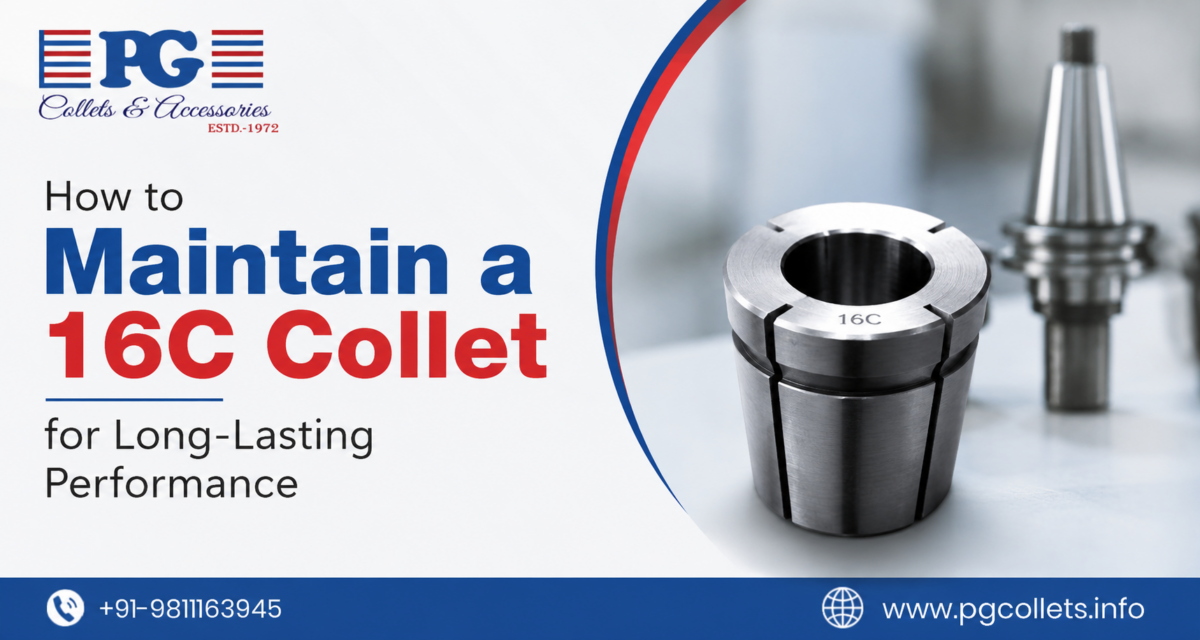
How to Maintain a 16C Collet for Long-Lasting Performance

Introduction

In precision machining, a 16C collet plays a crucial role by offering a secure grip, ensuring that operations are performed accurately and consistently. But no matter how good a collet is, it can be compromised if it’s not maintained correctly. The life of your clamping tools can be shortened and clamping accuracy can diminish from dirt, metal chips, not being stored properly, or from regular use. Luckily, there are a number of simple measures that can help you safeguard your investment and maintain smooth machining operations. In this guide, you’ll learn how to maintain a 16C collet for reliable, long-lasting performance.

Why Regular Maintenance of a 16C Collet Matters

All machining operations impose stress on a collet. Repeated clamping and exposure to coolant and metal debris can impact its accuracy and gripping capacity over time.

Regular maintenance prevents excessive wear, lowers run out and enhances machining accuracy. It also reduces unexpected machine downtime and increases the lifespan of the collet and the spindle.

Regardless if you’re running a CNC machine or a manual lathe, keeping your collet in good condition is an easy way to reap extended rewards.

Essential Tips for the Maintenance of Your 16C Collet

These are some of the most important tips for maintaining your 16C Collet.

Clean the Collet After Each Use

Cleaning after every machining cycle is one of the most crucial maintenance practices. Slots and grips can accumulate chips, dust, coolant and oil.

Clean the collet with a soft brush or compressed air to remove any loose debris, and use a clean, lint-free cloth to wipe the collet. Cleaning the collet guarantees the correct clamping and helps to avoid unnecessary wear.

Check for Wear and Damage

By doing routine checks, you can catch issues before they impact on production.

Check the collet for:

  • Cracks or chipped edges
  • Rust or corrosion
  • Worn gripping surfaces
  • Deformed slots
  • Excessive runout

When there is any damage to be seen or diminished holding ability, replace the collet immediately as to not affect the accuracy of the machining.

Apply Proper Lubrication

If the collet will be stored for a long period of time, a light coat of machine approved lubricant will help protect the collet from rust and corrosion.

Do not use too much oil because too many oil particles or metal particles will collect in the oil and affect the clamping performance.

Storage Procedures to Ensure a Longer Service Life

Follow these storage procedures to maximize service life:

The condition of a 16C collet is mainly maintained by storage.

Store collets in a clean, dry place, away from moisture and contaminants. A dedicated collet rack or protective storage case will help avoid accidental impacts which could soil or damage the precision ground surfaces.

Avoid stacking collets loosely in toolboxes where they can come into contact with other metal tools.

Common Issues That Often Shorten Collet Performance

If you’re seeking to improve collet life, you should be aware of some frequent issues that often shorten performance.

A machinist with years of experience can still be responsible for reducing the life of a collet if he or she practices poor maintenance.

A few of the common errors made are:

  • Inserting the incorrect size collet into the lathe.
  • Failure to select the proper collet for the work being turned.
  • Overtightening the collet.
  • Avoid walking on electrical components that are showing signs of wear.
  • Not removing chips from the end of the machine after the operation.
  • In humid conditions, the use of storing collets should be avoided.
  • It is a good idea to continue using damaged collets.

These errors can be avoided to ensure the consistency of the machining process and to minimise replacement costs.

Best Practices for Maximum Performance

To prevent this, users should implement the following best practices for maximum performance:

Create a routine maintenance plan for your collet to ensure you’re getting the most out of it.

Here are a few easy tips to keep in mind:

  • Wipe the collet before and after use.
  • Perform regular inspection for wear or damage.
  • Keep in a safe dry place.
  • Workpiece size shall be used only for the workpieces recommended in the instruction sheet.
  • Change worn collets before it becomes inaccurate.

These are simple, but effective, steps to increase the efficiency of the machining process and maintain it over time.

Conclusion

Keeping a 16C collet is the simple yet crucial aspect of reliable machining. All of these can help improve accuracy, tool life and machine uptime. These maintenance practices can help ensure that your 16C collet continues to function effectively and that your overall machining processes remain efficient.

Call To Action

If you’re searching for high-performance 16C collets, look no further! Speak to PG Collets today about our variety of meticulously designed, reliable collets. See our website for the perfect collet for your needs.
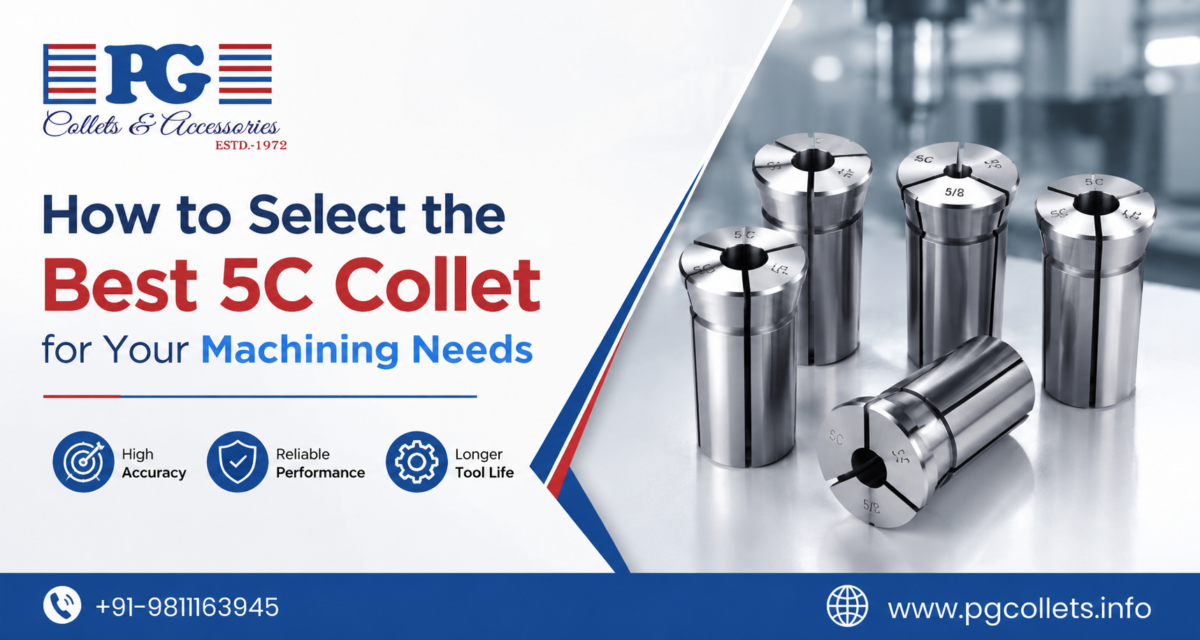
How to Select the Best 5C Collet for Your Machining Needs

Introduction

The right 5C collet can impact the quality, accuracy and efficiency of your machining operations. Regardless of the lathe, CNC machine or milling machine you are using, the collet you use will directly influence your work piece holding ability. If the collet is not of good quality or set up properly, it can cause vibrations, loss of precision and needless tool wear. This is why it is important to know how to choose the best 5C collet for your machining application. This guide provides guidelines to understand important factors that you can consider when making the decisions and ensuring that you get consistent machineability results.

The Importance of Selecting the Right 5C Collet

A 5C collet can be used to hold workpieces such as round, square or hexagonal with high concentricity and good gripping force. It has a secure hold and so is helpful to lessen runout and enhance machining accuracy.

But, not all collets can be used in all applications. The gripping capacity, tolerance and material vary from job to job. The choice of the wrong collet can have an impact on surface finish, dimensional accuracy and production speed.

A good quality collet will enhance your machine spindle’s performance, and prolong the life of your cutting tools.

Selection of 5C Collet – Consideration Factors

1. Workpiece Size

The first step is to select the correct size of collet required for the work piece. The correct size of the collet will give the greatest grip and will limit the movement during machining.

Do not use too large or too small a collet as it decreases clamping efficiency and can cause damage to the collet and/or the piece being clamped.

2. Material Quality

The material used in making a 5C collet is of great importance to its durability. Hardened alloy steel is often used because of its high wear resistance and ability to hold accuracy for long periods.

Good materials also provide even clamping pressure, even after multiple processing cycles.

3. Accuracy Requirements

Precision is required in varying degrees for different industries. For aerospace, automotive or medical parts, opt for precision-ground collets that have a low runout.

When precision is not a critical factor, standard precision collets can offer acceptable precision and can be used to machine a variety of parts at a reasonable cost.

4. Type of Application

Consider your most frequent parts.

  • Round stock
  • Hexagonal stock
  • Square stock
  • Special-shaped components

There are specialist collets available from many manufacturers, which will allow for higher holding power with the same precision.

A High Quality 5C Collet Should Have the Following Features

Not all collets will be made to the same quality. A good 5C collet will usually have one or more of the following characteristics to enhance machining performance.

Look for:

  • Precision-ground surfaces
  • Excellent concentricity
  • Heat-treated construction
  • Strong gripping force
  • Long service life
  • Corrosion-resistant finish
  • Consistent dimensional accuracy

These features contribute to the repeatability of machining results and minimize machine downtime.

Moreover, a well established manufacturer will have higher control measures that will assure good quality control and consistent performance in every manufacturing lot.

Common Pitfalls of Purchasing a 5C Collet

Targeted at beginners of the 5C Collet, this article examines common pitfalls of purchasing a 5C Collet.

Some machinists only consider the cost of a machine, but this approach may not maximize productivity and replacement expenses.

Some of the typical missteps are:

  • Purchasing low quality collets that have poor tolerances
  • Ignoring runout specifications
  • Using an incorrect collet size
  • Not checking collets for wear or damage
  • Using two or more different collets for the same workpiece size

It’s also important to inspect regularly and maintain your collets properly to lengthen their lifespan. Properly clean the collet after every machining cycle and store it properly to avoid rust and contamination.

To Get the Most Out of Collet, Use the Following Tips

Even the best collet will fail to function properly if it is not maintained properly.

Follow the following simple practices:

  • Wipe down the collet and spindle prior to installation.
  • Use the recommended torque to tighten the collet.
  • Change worn or damaged collets as soon as possible.
  • Keep collets in a clean and dry place.
  • Always use the right size of the collet for the correct work.

These tiny maintenance tips can make a huge difference in manufacturing accuracy and stave off any unwelcome production problems.

Conclusion

Choosing the correct 5C collet involves a bit more than just size matching. It is important to take into account material quality, machining precision, type of workpieces, durability and reputation of the manufacturer before you buy one. A good collet provides accuracy, longer tool life and more efficient machining. A good 5C collet, properly suited to the application will help ensure consistent performance and minimise downtime and maintenance.

Call To Action

In search of high quality 5C collets for great accuracy and durability? Call PG Collets today to discover the best solution for your needs and wants. Our precision-engineered collets are designed to help you achieve consistent performance and long-lasting reliability. Check out our website and select the appropriate collet for your next machining application.