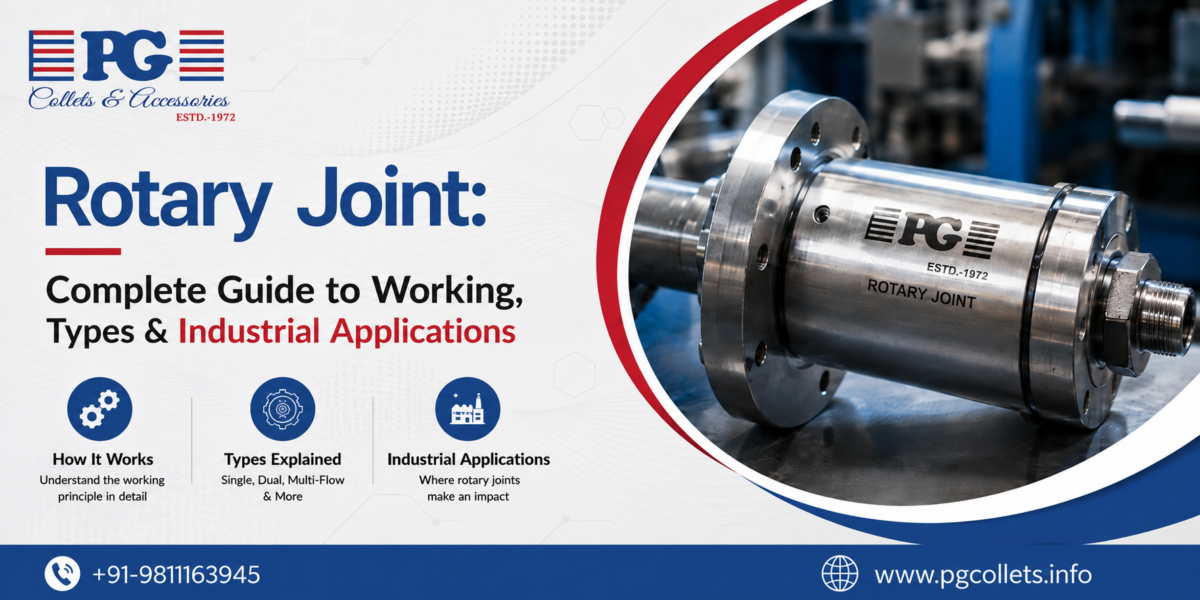

Rotary Joint: Complete Guide to Working, Types & Industrial Applications

Introduction

In today’s industrial equipment, it is necessary to have continuous rotation and assured fluid transfer for efficient production. A Rotary Joint is one of the most important mechanical elements which allows steam, water, air, oil or other fluid to flow from a stationary source to rotating equipment without leaking.

In industries such as manufacturing, textile processing, paper making, food processing or CNC machines, knowing how a Rotary Joint works can have a positive impact on machine performance, maintenance costs, and operational reliability. In this comprehensive guide, we will delve into its operation, various models, essential characteristics, its applications in the industry, and the advantages of investing in the appropriate Rotary Joint.

What is Rotary Joint?

A Rotary Joint is a precision engineered component that is used to move fluid from fixed pipes to rotating parts of machinery. It forms a closed connection allowing rotation without any interruption of fluid flow.

Typically, these joints are made of high strength stainless steel, carbon steel, brass, or special alloys depending on the operating environment. They provide excellent sealing to prevent leakage, have a low friction coefficient and will provide the long lifespan required in challenging industrial environments.

Why is a Rotary Joint important?

  • Allows for fluid to flow continuously when rotating
  • Does not leak or lose pressure
  • Reduces machine downtime
  • Can withstand high speed industrial processes
  • Optimises overall equipment efficiency

For all of these benefits, Rotary Joints have become an indispensable part of many industrial manufacturing processes.

How to Work a Rotary Joint?

A Rotary Joint’s working principle is simple and yet very effective. One end is fixed and attached to the fluid source, the other is moving with the machine shaft or cylinder.

Precision seals keep the joint tight and provide smooth rotational motion inside the joint. Bearings help to hold the rotating assembly in place, minimizing wear and guaranteeing consistent performance under different speeds and pressures.

Step-by-Step Working Process

  1. The inlet is stationary and the fluid goes through it.
  2. The Rotary Joint provides flow direction of the fluid to the rotating component.
  3. Seals within the product prevent leakage during continuous rotation.
  4. Bearings are used to ensure motion with little friction.
  5. The fluid is removed at the end of the heating, cooling, lubrication, or hydraulic purpose.

This effective system makes Rotary Joints suitable for machines with long production runs.

Types of Rotary Joints

The Rotary Joint can be designed differently for various industries depending on the type of fluid, pressure, temperature and machine configuration.

1. Steam Rotary Joint

Steam Rotary Joints are made for use at high temperatures where heated rollers or cylinders must be continuously supplied with steam.

Common applications:

  • Paper mills
  • Textile dryers
  • Corrugated board machines
  • Rubber processing equipment

2. Water Rotary Joint

These joints are used to provide cooling water to rotating equipment for temperature control and to enhance machine performance.

They are employed in a wide range of plastic molding, steel processing and printing machinery applications.

3. Air Rotary Joint

Air Rotary Joints are used to route compressed air to rotating tools and automated equipment. They are reliable and ensure constant pressure when operating.

Common applications:

  • Robotic systems
  • Packaging machines
  • Assembly lines

4. Multi-Passage Rotary Joint

A Rotary Joint with multiple passages means that different fluids can flow through different internal passages at the same time. Water, air, and hydraulic oil can flow from one joint to the other without mixing, for instance.

This design is commonly used in advanced automation and complex industrial machinery.

Key Features of Rotary Joints

A Rotary Joint’s engineering quality and sealing technology are important for its performance. The following are the characteristics which make them very reliable.

Precision Sealing System

Leakage is minimized and excellent performance is maintained with advanced sealing materials under high pressure and high temperature.

Corrosion-Resistant Construction

The Rotary Joints made in many cases of stainless steel or materials which are specially treated to prevent corrosion from water, chemicals or aggressive industrial fluids.

Low Friction Operation

The bearings used provide for the proper alignment of rotating and stationary parts, which helps to reduce friction and increases efficiency and life.

Capable of Withstanding High Pressure and Temperatures

Industrial Rotary Joints have been developed to operate in the most demanding environments, and are suitable for both hot and cold service conditions.

Industrial Applications of Rotary Joints

A Rotary Joint is used in many industries for continuous flow of fluids in rotating equipment.

Paper Industry

Rotary Joints are used to provide steam to heated drying cylinders in paper manufacturing machines. A uniform temperature is achieved, which benefits the quality and efficiency of the product.

Textile Industry

Rotary Joints are used in the drying, dyeing and finishing processes in textile machines for steam and thermal oil circulation.

Plastic and Rubber Processing

Cooling water Rotary Joints keep mold temperature under control for improved product quality and faster production cycles.

Food and Beverage Industry

Hygienic Rotary Joints are used in many food processing machines for the applications of heating, cooling and cleaning, when reliability and cleanliness are important.

Metal and Steel Processing

During long periods of operation Rotary Joints circulate the cooling fluid through rollers and rotating equipment, thereby preventing machinery from excessive heat.

Benefits of Using Rotary Joints

Choosing an appropriate Rotary Joint can bring many benefits in industrial production.

Improved Machine Efficiency

Continuous fluid transfer guarantees stable machine operation, so that the machines operate at their best.

Reduced Leakage

A precision sealing technology reduces fluid losses, contributing to the conservation of energy and a decrease in operating costs.

Longer Equipment Life

Rotary Joints minimize friction and ensure adequate cooling or lubrication in bearings, rollers and rotating equipment, thus prolonging their useful life.

Lower Maintenance Costs

High quality construction and long-lasting sealing components minimize unexpected failures, leading to reduced downtime and maintenance costs.

Enhanced Production Reliability

Reliable operation during continuous and high-speed industrial processes helps improve product quality while ensuring smooth and uninterrupted manufacturing performance.

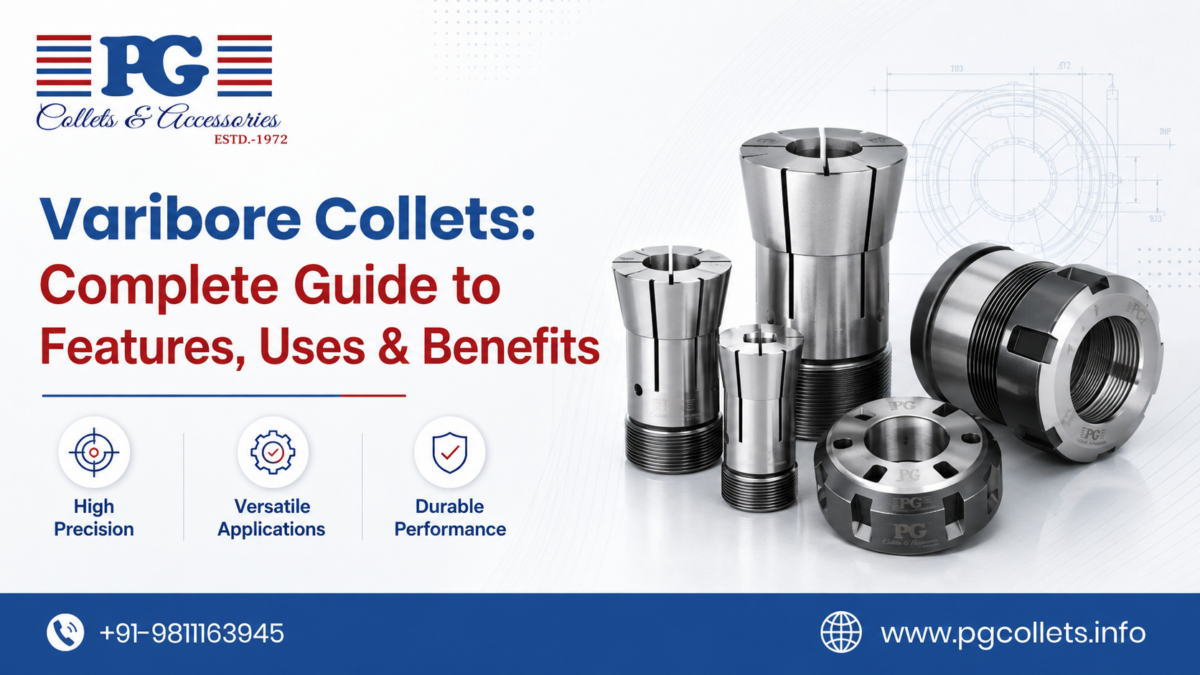
Varibore Collets: Complete Guide to Features, Uses & Benefits

Introduction

In precision machining, it’s as if every component of a toolholder makes a huge difference. The Varibore Collets help ensure exceptional gripping accuracy in various workpieces sizes making them popular in CNC machines, lathes and precision machining applications.

As a machine shop owner, production engineer, or someone who has an interest in becoming familiar with industrial tooling, knowing how Varibore Collets work can help enhance the quality of your machining operations, save set up times and boost productivity. This comprehensive resource discusses their functionality, uses, benefits and selection for different machining operations.

What Are Varibore Collets?

Varibore Collets are precision engineered work-holding collets which provide a precision grip on round bars and components. However, Varibore collets are made to fit a range of controlled gripping that is more useful in a production environment than the fixed size collets.

The material of this collets is usually hardened alloy steel and heat-treated to ensure prolonged operation. Their flexible clamping structure distributes clamping force evenly around the work piece to reduce runout and enhance machining smoothness.

Why are they so popular?

  • High gripping precision
  • Excellent concentricity
  • Longer tool life
  • Able to be used with repetitive production tasks
  • Lower vibration on the machine tool during the machining operation

These properties make Varibore Collets a favorite in industries that require dimensional accuracy.

Key Features of Varibore Collets

The design characteristics can be used to explain the improvement in the efficiency of these collets in difficult machining operations.

1. Precision Clamping Range

The one real benefit of Varibore Collets is that they have a specified diameter range that they will grip. This minimizes the number of collers required and will provide good holding accuracy.

For instance, if the diameters vary slightly among different models, an operator may not have to change collets; they may be able to employ an appropriately sized Varibore Collet that falls within its recommended range of diameters.

2. Superior Concentricity

The finished component’s quality directly depends on the good concentricity. With their high precision, the runout during turning, grinding or milling is kept to a minimum.

This leads to smoother surface finishes, and more accurate dimensional stability from one production run to the next.

3. Durable Material Construction

Most Varibore Collets are manufactured from superior grade alloy steels and are precision ground after heat treatment. This combination provides:

  • High wear resistance
  • Excellent rigidity
  • Long operational lifespan
  • Stable production performance over prolonged time periods

4. Easy Installation

They are standardised to ensure simple fitting and removal, thereby minimizing downtime of machines during production change-over.

Uses of Varibore Collets in Precision Machining

You can use Varibore Collets to hold and guide workpieces in a wide range of applications. They can be used in a wide range of applications, from small workshops to large industrial production lines.

CNC Turning Operations

Proper work holding is crucial when it comes to repeatability in a CNC lathe. The Varibore Collets keep cylindrical components securely in place and provide high-speed machining with minimum vibration.

Typical applications include:

  • Automotive shafts
  • Precision bushings
  • Hydraulic fittings
  • Aerospace components

Grinding Applications

A grinding operation should be very precise. It can cause some loss of surface finish and dimensional accuracy if it is not aligned properly. Precise positioning is ensured throughout the grinding process with Varibore Collets.

Bar Feeding Systems

Reliable gripping systems are needed for automatic bar feeders. These are collets used for the consistent feeding of round bars, suitable for high volume production.

Tool Room Manufacturing

In tool rooms, parts are frequently produced in small quantities. The versatility of Varibore Collets saves time setting up the machine, but still provides accuracy for various diameters of work.

Benefits of Using Varibore Collets

The right work holding solution can have a direct impact on machining efficiency. Let’s talk about the primary benefits provided by Varibore Collets.

Improved Machining Accuracy

The uniform clamping pressure prevents the workpiece from being deformed, which helps to ensure that the finished product is more accurate and the rejection rate is lower.

Faster Production Setup

One collet may be used for a small diameter range, which means that the operator does not need to change tools so many times between similar operations.

This is particularly useful in batch production where downtime of machines is crucial to productivity.

Better Surface Finish

Stable gripping minimizes vibration and chatter in cutting process. This means that the surface finish of the manufactured components is more streamlined and there is less dimensional variation.

Increased Machine and Tool Life

This not only helps prevent vibration in the workpiece, but also decreases vibration in cutting tools and spindle parts, thereby reducing wear. This helps to reduce maintenance costs over time.

Choosing the Right Varibore Collet

The choice of Varibore Collet can be confusing when selecting the appropriate tool for your project. It is equally important to pick right collet as it is to select right cutting tool.

Consider these factors before buying:

FactorWhy It Matters
Workpiece diameterMatch the gripping range accurately
Machine compatibilityUse the appropriate type and size of collet
Material hardnessUse hardened precision collets for durability
Runout toleranceLess runout will result in better machining quality
Production volumeHigher quality collets perform more efficiently during continuous use

Do not exceed the recommended range of gripping (manufacturer’s specifications), since over-expansion may cause loss of accuracy and shorten the life of the collet.

Common Mistakes to Avoid

No matter how good the collet is, it can perform poorly if it isn’t used correctly. Make sure to watch for these common mistakes.

Using the Wrong Diameter Range

Holding force will be lost if you try to hold material outside the recommended range and the collet and/or workpiece may be damaged.

Ignoring Regular Cleaning

These slots in the collet can accumulate chips, coolant residue and dust, which may reduce gripping performance and accelerate wear. Regular cleaning helps maintain consistent clamping accuracy.

Over-Tightening the Collet

Applying excessive tightening force does not improve gripping strength. Instead, it may deform the collet, increase runout and reduce its service life.

Skipping Inspection

Regularly inspect the collet for cracks, wear and loss of elasticity. Replacing worn collets before failure helps maintain machining accuracy and ensures safer machine operation.

Conclusion

Varibore Collets are an essential work-holding solution for precision machining applications where accuracy, repeatability and reliability matter most. Their controlled gripping range, excellent concentricity and durable construction make them suitable for CNC turning, grinding, bar feeding and tool room manufacturing.

By selecting the correct Varibore Collet and following proper maintenance practices, manufacturers can improve machining quality, reduce setup time, achieve better surface finishes and extend the life of both machines and cutting tools.

Call to Action

Looking for premium-quality Varibore Collets for your machining requirements? Contact our precision tooling experts today to find the right collet solution for your CNC and production applications.