

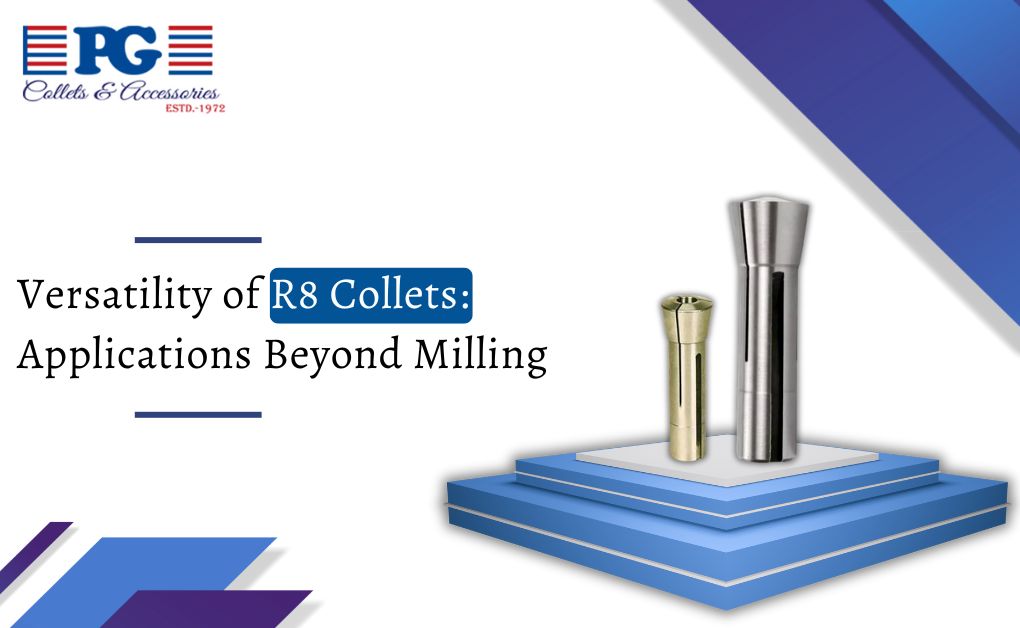
When it comes to precision machining, tooling plays an equally important role as the machinery itself. Among the various workholding solutions, collets stand out for their accuracy, versatility, and efficiency. While the R8 collet is often associated with milling machines, its applications extend far beyond this single process. By understanding the differences between collet types—such as the 5C collet and 16C collet—manufacturers can maximize productivity and achieve unmatched precision in diverse industries.
In this article, we’ll explore the versatility of the R8 collet, examine its uses beyond milling, and highlight how companies like PG Collets deliver advanced workholding solutions to meet evolving industrial demands.
Understanding Collets and Their Role
Collets are cylindrical sleeves designed to hold workpieces or cutting tools securely. They provide a higher level of concentricity and grip compared to standard chucks, making them indispensable in high-precision operations. Unlike chucks, which rely on jaws, collets distribute clamping force evenly around the surface, minimizing distortion and vibration.
Three of the most commonly used collets are:
- R8 collet – Popular in milling, compact and versatile.
- 5C collet – Widely used in turning, grinding, and inspection setups.
- 16C collet – Ideal for larger bar stock and heavy-duty machining.
The R8 Collet: A Brief Overview
Developed for use in Bridgeport milling machines, the R8 collet is known for its simple design and quick tool changes. It offers high precision, making it a preferred choice for machinists requiring tight tolerances. But limiting the R8 collet to just milling is an oversight—it has proven valuable in numerous other machining applications.
Applications of R8 Collets Beyond Milling
1. Drilling and Boring
The R8 collet can be used to hold drill bits and boring tools securely. Its concentric grip reduces runout, ensuring smoother holes and better accuracy compared to standard chucks.
2. Reaming for Precision Fits
When working with reamers, precision is critical. The R8 collet provides stability, helping operators achieve consistent hole diameters, which is essential in aerospace, automotive, and medical industries.
3. Tapping Operations
Threading with taps requires a secure grip and alignment. Using an R8 collet minimizes tap breakage by ensuring even pressure and reducing vibration during operation.
4. Grinding Applications
While more commonly associated with 5C collet systems, grinding setups can also benefit from R8 collets. Their firm grip on smaller tools makes them a viable option in precision grinding tasks.
5. Tool Holding in Multi-Purpose Machines
With multi-functional machining centers becoming more common, the R8 collet is increasingly used to hold a variety of small-diameter tools. Its compatibility and ease of use make it adaptable across platforms.
Comparing R8, 5C, and 16C Collets
Each type of collet has strengths tailored to specific operations:
- R8 collet – Best for tool holding in milling and light machining applications. Compact, easy to change, and versatile.
- 5C collet – Designed primarily for workholding in turning and grinding. Offers flexibility with round, hex, and square stock.
- 16C collet – Handles larger bar stock, up to 1-5/8 inches, making it ideal for heavy-duty turning and production environments.
By understanding these differences, manufacturers can select the right collet for the right job, boosting efficiency and tool life.
Essentials for Different Climates, Terrains, and Cultural Settings
When choosing collets for operations across different regions, factors like temperature, humidity, and even the availability of replacement tooling must be considered. For instance, in humid environments, corrosion-resistant collets are essential. Meanwhile, industries in regions with large-scale automotive or aerospace hubs may favor 5C collet or 16C collet systems due to their ability to handle high-volume work.
This flexibility highlights why the R8 collet remains an attractive option—it adapts to multiple environments and operational needs, making it a universal toolholding solution.
Industries Benefiting from R8 Collets
- Automotive Manufacturing – Precision drilling, tapping, and milling.
- Aerospace Components – Complex reaming and grinding applications.
- Medical Devices – Small-scale, high-tolerance machining operations.
- Tool and Die Shops – Multi-use flexibility with various machining centers.
- Education & Training – Popular in vocational training due to its simplicity and affordability.
Why Choose PG Collets for Advanced Workholding?
Selecting the right collet system is not just about compatibility—it’s about long-term reliability, durability, and accuracy. PG Collets specializes in delivering premium-quality collets, from R8 collet systems to 5C collet and 16C collet solutions, designed to meet the exacting standards of modern machining industries. With their expertise, businesses can ensure consistent performance, reduced downtime, and enhanced productivity.
Conclusion
The R8 collet is far more versatile than its association with milling machines might suggest. Its applications span drilling, reaming, tapping, and even grinding, making it a valuable asset in industries ranging from automotive to aerospace. While the 5C collet and 16C collet excel in specific workholding applications, the R8 collet remains a flexible, reliable option for diverse machining needs.
👉 For businesses seeking high-quality collet solutions, PG Collets offers expertise and precision-engineered products designed to keep your operations running smoothly and efficiently. Explore their wide range of collets and discover how the right tooling can transform your machining performance.
