

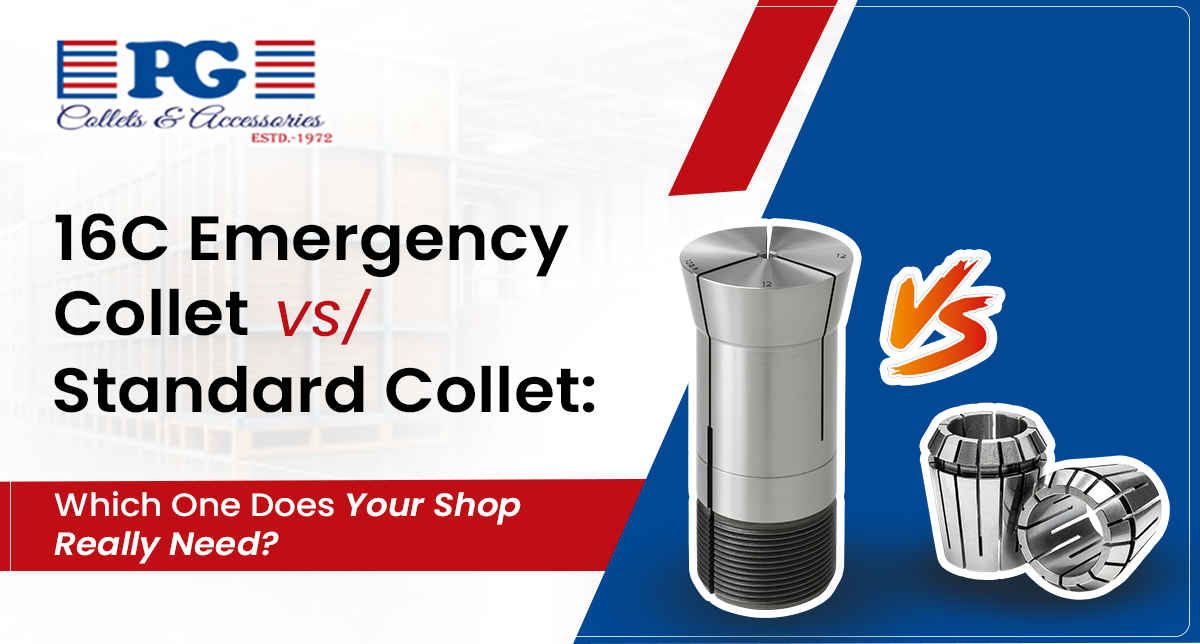
16C Emergency Collet vs. Standard Collet: Which One Does Your Shop Really Need?

Choosing the right workholding solution is critical for accuracy, efficiency, and productivity in any machine shop. Among the most commonly used options are the 16C Emergency Collet and the Standard Collet. While both serve the same fundamental purpose—securely holding workpieces—their applications, flexibility, and long-term value can differ significantly.

Understanding the strengths and limitations of each collet type can help shop owners and machinists make informed decisions that align with their production needs.

Understanding Collets in Machining Operations

Collets are precision components designed to grip cylindrical or hexagonal workpieces during machining operations. They provide better concentricity, faster setup times, and more uniform clamping compared to traditional chucks.

Both emergency and standard collets are widely used in turning, grinding, and milling applications. However, the choice between them depends on factors such as job volume, part variety, tolerance requirements, and cost considerations.

What Is a Standard Collet?

A Standard Collet is a ready-to-use workholding tool manufactured to fixed internal dimensions. It is designed to hold workpieces of specific sizes within a defined tolerance range.

Key Characteristics of Standard Collets

  • Pre-machined bore with precise tolerances
  • Ready for immediate use
  • Ideal for repetitive production runs
  • Consistent gripping accuracy

Standard collets are commonly used in high-volume environments where part dimensions remain constant. Their simplicity and reliability make them a staple in many machine shops.

Benefits of Using a Standard Collet

Consistent Accuracy

Because standard collets are factory-finished, they offer excellent concentricity and repeatability. This consistency is crucial for precision machining tasks where tight tolerances must be maintained.

Faster Setup Times

Since no additional machining is required, operators can install and use a standard collet immediately. This saves time during setup and changeovers, especially in production-focused operations.

Lower Initial Cost

For shops producing the same parts repeatedly, standard collets are cost-effective. There is no need for customization, which helps keep tooling expenses predictable.

Limitations of Standard Collets

Despite their advantages, standard collets have limitations. Their fixed bore size means they lack flexibility when dealing with non-standard or custom parts. If a job requires a slightly different diameter, a new collet may be needed.

For job shops handling varied or one-off components, relying solely on standard collets can increase tooling inventory and costs over time.

What Is a 16C Emergency Collet?

A 16C Emergency Collet is supplied with an undersized or blank bore that can be machined to fit a specific workpiece. This customization allows the collet to match the exact dimensions of the part being held.

Emergency collets are particularly valuable when dealing with special diameters, thin-walled parts, or components requiring exceptional concentricity.

Advantages of a 16C Emergency Collet

Custom Fit for Precision

One of the biggest advantages of a 16C emergency collet is its ability to be machined for a perfect fit. This minimizes runout and ensures superior gripping accuracy, even for delicate or irregular components.

Greater Flexibility

Emergency collets are ideal for shops that frequently work on custom jobs or prototypes. A single collet can be modified for different applications, reducing the need for extensive tooling inventories.

Improved Holding for Delicate Parts

Because the bore is machined specifically for the workpiece, clamping pressure is distributed evenly. This reduces the risk of part deformation, making emergency collets suitable for thin or soft materials.

When a Standard Collet Makes More Sense

A standard collet is often the better choice when:

  • Running high-volume production jobs
  • Machining parts with consistent dimensions
  • Prioritizing speed and simplicity
  • Minimizing setup complexity

In such cases, the reliability and convenience of a standard collet outweigh the need for customization.

When to Choose a 16C Emergency Collet

A 16C emergency collet is the preferred option when:

  • Handling custom or non-standard part sizes
  • Producing prototypes or short-run jobs
  • Working with fragile or thin-walled components
  • Requiring maximum concentricity

Shops that value adaptability and precision often find emergency collets to be a smart long-term investment.

Comparing Cost vs. Value

While a standard collet typically has a lower upfront cost, it may not always offer the best value. For shops dealing with varied job requirements, the ability to customize an emergency collet can reduce the need to purchase multiple fixed-size collets.

In contrast, production-focused shops benefit from the predictability and lower per-part cost of standard collets.

Making the Right Choice for Your Shop

The decision between a 16C Emergency Collet and a Standard Collet depends on your shop’s workflow. Many successful machine shops keep both options available—standard collets for routine jobs and emergency collets for specialized tasks.

This balanced approach ensures readiness for diverse machining challenges without compromising efficiency or accuracy.

A Reliable Partner for Precision Collets

Selecting high-quality collets is just as important as choosing the right type. PG Collets focuses on delivering precision-engineered collet solutions designed to meet the demands of modern machining environments. Their products support both production efficiency and customization needs, helping shops maintain accuracy and reliability.

Conclusion

Both standard and emergency collets play essential roles in machining operations. A Standard Collet excels in repetitive, high-volume work, while a 16C Emergency Collet offers unmatched flexibility and precision for custom applications.

By understanding your shop’s requirements and balancing cost with versatility, you can choose the right collet solution that supports productivity, accuracy, and long-term success.
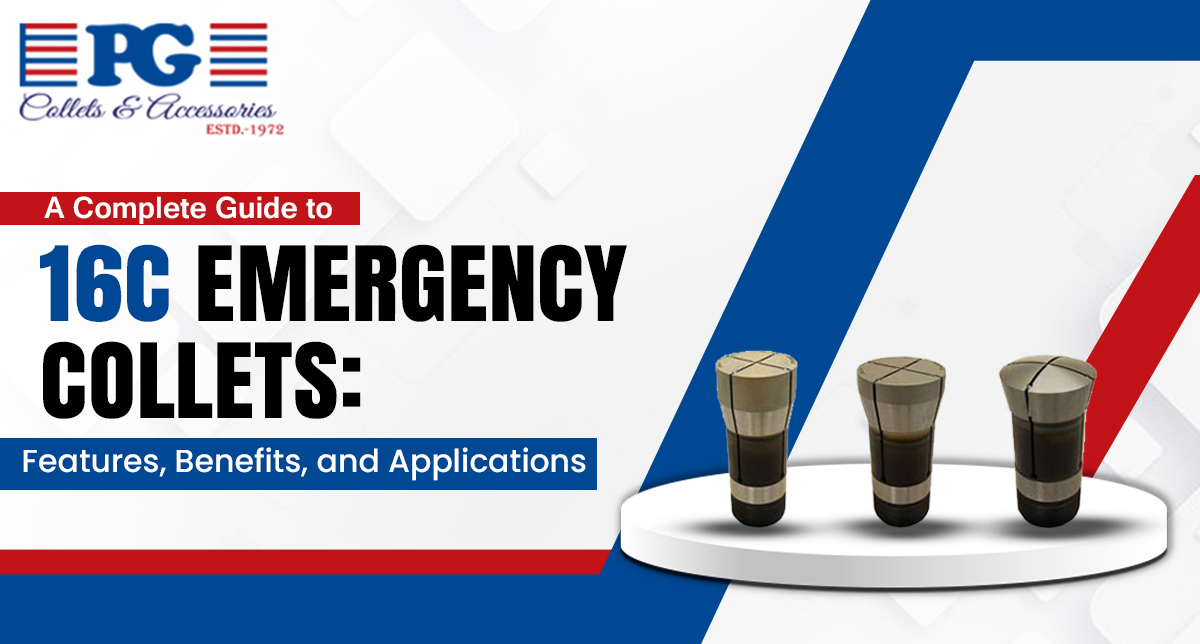
A Complete Guide to 16C Emergency Collets: Features, Benefits, and Applications

Precision machining relies heavily on the right tooling, and among the most essential components in this process are collets. They ensure secure workpiece holding, consistent accuracy, and smooth machining operations. While standard collets work for fixed parameters, many industries face situations where they need custom gripping capabilities. This is where the 16C Emergency Collets proves its value. Designed for flexibility and rapid customization, it has become a preferred choice for machinists who handle diverse or irregular workpieces.

This guide explores the features, benefits, and applications of the 16C Emergency Collet, helping you understand why it is such a valuable tool in modern machine shops. Manufacturers like PG Collets continue to enhance the usability and precision of these collets, making them reliable for demanding environments.

Understanding the 16C Emergency Collets

Collets are workholding devices used in lathes, CNC turning centers, and grinders. The 16C Emergency Collets belongs to the widely used 16C series, known for its large gripping range, rigidity, and compatibility with industrial machines. However, what sets the emergency version apart is its machinability. Unlike standard 16C collets—which come pre-sized—the emergency version has a machinable face, allowing operators to bore or shape the inside to match specific workpiece requirements.

This flexibility reduces downtime and eliminates the need to buy multiple custom collets. When workpieces vary frequently in size or profile, an emergency collet becomes an economical and practical solution.

Key Features of the 16C Emergency Collets

1. Machinable Front for Customization

The most important feature is the soft machinable face. Machinists can bore the collet to exact dimensions, ensuring a perfect fit for any custom diameter. This capability is especially valuable when working with short production runs or irregular shapes.

2. Compatibility With Standard 16C Systems

A 16C collet system is commonly found in turning centers due to its strength and reliability. The emergency version fits perfectly into these systems without requiring modifications, making it easy to integrate into existing setups.

3. High Rigidity and Clamping Power

Despite having a machinable face, the collet maintains excellent rigidity. It delivers consistent clamping pressure, ensuring the workpiece stays firmly in place even during heavy cuts or high-speed machining.

4. Availability in Different Materials

Emergency collets are usually offered in:

  • Steel
  • Brass
  • Aluminum

Steel versions provide durability, while brass and aluminum options allow faster machining of the bore. This versatility helps operators choose the right collet based on job requirements.

5. Front and Back Pin Holes

These pin holes help in easy machining alignment. They allow the collet to be centered correctly in a fixture before boring, reducing errors and improving accuracy.

Benefits of Using a 16C Emergency Collets

1. Cost-Effective for Custom Jobs

Purchasing custom-made collets for every unique diameter can be expensive. The emergency version is much more economical since it can be machined repeatedly to suit different needs (within its usable limits).

2. Reduces Lead Time

Instead of waiting for a custom collet to be manufactured and shipped, machinists can bore the emergency collet in-house—saving days or even weeks of downtime.

3. Ideal for Low-Volume or Prototype Work

When machining a part that won’t be repeated often, using a standard collet is impractical. A 16C Emergency Collets is a fast and efficient option for prototypes, specialty components, and one-off jobs.

4. Improved Accuracy

Because the collet is machined to exact dimensions of the specific workpiece, it ensures near-perfect concentricity. This is critical for precision turning applications.

5. Multipurpose Applications

Emergency collets can hold round, square, hex, or irregular shapes, depending on how they are machined. This adaptability makes them valuable in workshops that handle diverse components.

Common Applications of 16C Emergency Collets

1. Custom and Small-Batch Manufacturing

Shops that frequently machine custom parts rely on emergency collets due to their versatility. They allow seamless transitions from one size or shape to another.

2. CNC Lathes and Turning Centers

Most modern CNC turning systems compatible with 16C collets can use the emergency version for complex setups.

3. Tool and Die Manufacturing

Precision is crucial in this industry. The collet’s ability to be machined to exact tolerances makes it ideal for tight-fitting components.

4. Repair and Maintenance Jobs

When a replacement part is needed urgently, having an emergency collet allows quick adaptation to nonstandard dimensions.

5. Machining of Irregular or Soft Materials

The ability to customize the bore helps in handling delicate materials such as plastics, copper, and soft alloys without damaging the surface.

How to Machine a 16C Emergency Collet Properly

To maximize performance and ensure accuracy, machinists typically follow these steps:

1. Mount the Collet Securely

Install the collet in the spindle or fixture and ensure it is seated properly.

2. Use Alignment Pins

Insert alignment pins into the pre-drilled holes to prevent rotation while machining.

3. Bore to the Required Diameter

Carefully machine the collet opening to the exact size needed. Use slow feeds and sharp tools to ensure a clean cut.

4. Deburr and Clean

Remove all burrs or chips from the machined surface. Any imperfections may affect grip quality.

5. Test Fit the Workpiece

Insert the workpiece and test for concentricity before starting the actual machining operation.

Following these steps helps maintain precision and extends the collet’s lifespan.

Conclusion

The 16C Emergency Collets is a versatile and indispensable tool for shops that require precision, flexibility, and fast turnaround. Whether used for prototypes, small batch work, or irregular shapes, it provides efficient workholding without the cost and delays of custom collets. With reliable performance, customizable features, and compatibility with standard 16C systems, it plays a crucial role in modern machining environments.

Manufacturers like PG Collets continue to support industries with high-quality collet solutions designed for durability and precision. For machinists seeking adaptability without compromising accuracy, the 16C Emergency Collet remains one of the smartest choices.

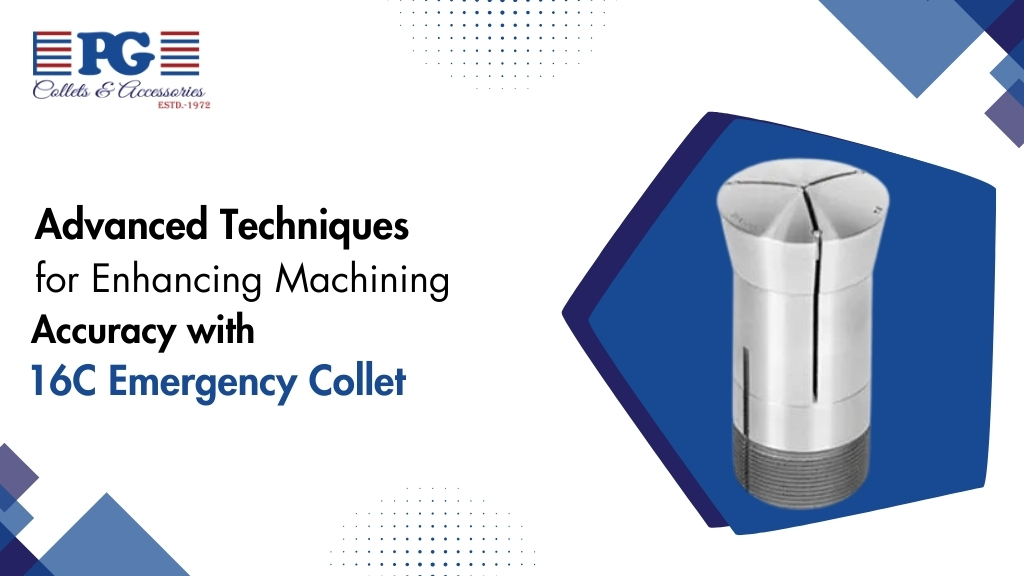
Advanced Techniques for Enhancing Machining Accuracy with 16C Emergency Collet

In the realm of precision machining, achieving superior accuracy is crucial for maintaining product quality and operational efficiency. The 16C emergency collet has become a key component in this pursuit of precision. This article delves into advanced techniques to leverage the 16C emergency collet effectively, ensuring that it delivers the highest standards of machining accuracy.


Understanding the 16C Emergency Collet

The 16C emergency collet is designed to offer precise clamping and support for various tooling applications. Its primary function is to hold the tool securely in place, reducing any movement that could impact the accuracy of the machining process. The design and versatility of the 16C emergency collet make it a valuable asset for tasks that demand exacting standards.


Optimizing Machining Accuracy with Advanced Techniques


1. Precision Setup and Calibration

The foundation of achieving high machining accuracy begins with the correct setup and calibration of the 16C emergency collet. Ensure that the collet is properly installed and aligned within the spindle. Any misalignment may result in inaccurate work in the end. Use precision measurement tools to check the alignment of the collet and the tool it holds. Regular calibration of your equipment helps in maintaining the desired accuracy throughout the machining process.

2. Leveraging Advanced Tooling Technologies

Pairing the 16C tool holder with cutting-edge tooling technologies can significantly enhance machining precision. Tools designed with advanced materials and coatings can improve performance and extend the lifespan of both the tooling and the collet. Utilize high-speed and high-feed cutting tools to complement the precision offered by the 16C collet, which allows for more accurate and efficient material removal.

3. Implementing Consistent Clamping Forces

Consistent clamping force is essential for maintaining the accuracy of the 16C emergency collet. Variations in clamping force can lead to tool movement and inconsistencies in the machining process. Use calibrated torque wrenches to apply uniform clamping pressure and regularly inspect the collet for signs of wear or damage that might affect its clamping ability. This consistency helps in achieving uniform results and reduces the risk of errors.

4. Utilizing Advanced Machining Techniques

Incorporating advanced machining techniques can further leverage the benefits of the 16C Machining Collet. Techniques such as high-speed machining, multi-axis machining, and precision grinding require the stability and accuracy that the 16C collet provides. High-speed machining minimizes vibration and heat generation, leading to more precise cuts and longer tool life. Multi-axis machining allows for complex part geometries with high precision, and precision grinding ensures fine surface finishes.

5. Routine Maintenance and Inspection

Regular maintenance and inspection of the 16C emergency collet are crucial for sustaining its performance and accuracy. Periodically clean the collet to remove debris and contaminants that could affect its operation. Inspect the collet for signs of wear, deformation, or damage, and replace it as necessary to maintain optimal performance. Proper storage and handling of the collet also play a role in preserving its accuracy.

6. Integrating Quality Control Measures

Implementing stringent quality control measures in your machining process can enhance the effectiveness of the 16C emergency collet. Employ precision measuring instruments to monitor the dimensions and tolerances of the machined parts. Regularly review and analyze the data to identify any deviations or trends that could impact accuracy. Adjust machining parameters and processes based on this data to continuously improve precision.


Case Study: Enhancing Accuracy with the 16C Emergency Collet

Consider a machining operation that requires the production of high-tolerance components. By integrating the 16C emergency collet into the setup, the operator achieved a notable improvement in accuracy. Through careful alignment, consistent clamping, and the use of advanced tooling, the machining process saw a reduction in runout and improved surface finish. Routine maintenance ensured that the collet remained in peak condition, contributing to overall operational efficiency.


Conclusion

The 16C emergency collet is a critical tool for achieving high machining accuracy, but its effectiveness relies on the implementation of advanced techniques. By focusing on precision setup, leveraging advanced tooling technologies, ensuring consistent clamping forces, and performing routine maintenance, manufacturers can maximize the benefits of the 16C collet. Integrating these techniques into your machining processes will not only enhance accuracy but also improve overall efficiency and product quality. Embrace these advanced methods to unlock the full potential of the 16C emergency collet and elevate your machining operations to new levels of precision and excellence.