

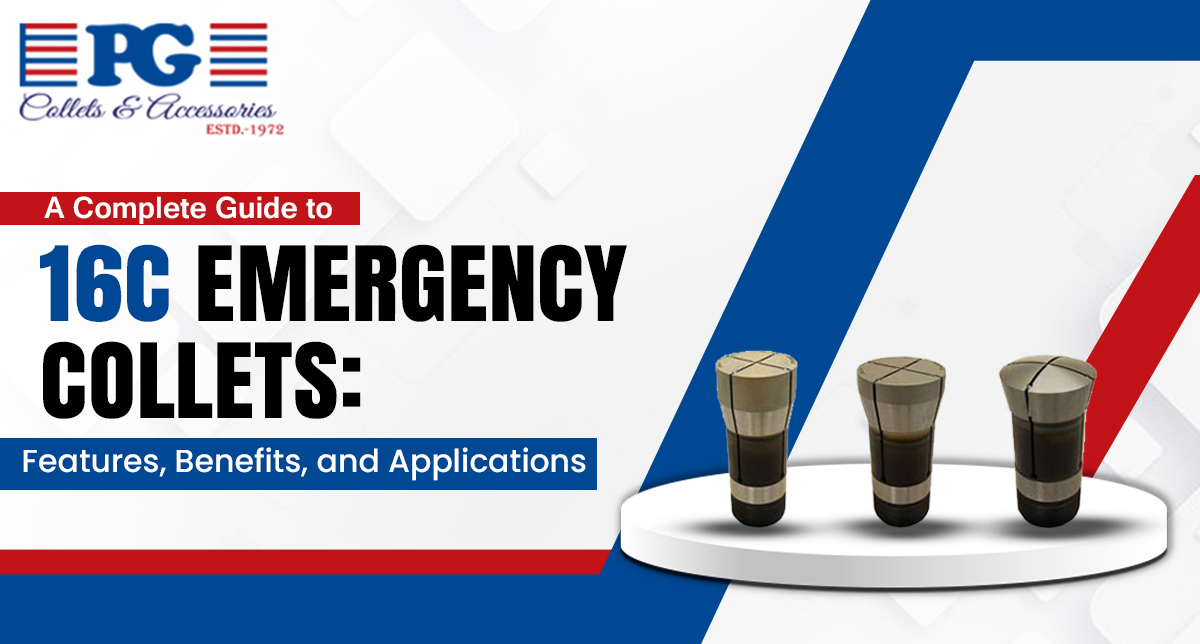
A Complete Guide to 16C Emergency Collets: Features, Benefits, and Applications

Precision machining relies heavily on the right tooling, and among the most essential components in this process are collets. They ensure secure workpiece holding, consistent accuracy, and smooth machining operations. While standard collets work for fixed parameters, many industries face situations where they need custom gripping capabilities. This is where the 16C Emergency Collets proves its value. Designed for flexibility and rapid customization, it has become a preferred choice for machinists who handle diverse or irregular workpieces.

This guide explores the features, benefits, and applications of the 16C Emergency Collet, helping you understand why it is such a valuable tool in modern machine shops. Manufacturers like PG Collets continue to enhance the usability and precision of these collets, making them reliable for demanding environments.

Understanding the 16C Emergency Collets

Collets are workholding devices used in lathes, CNC turning centers, and grinders. The 16C Emergency Collets belongs to the widely used 16C series, known for its large gripping range, rigidity, and compatibility with industrial machines. However, what sets the emergency version apart is its machinability. Unlike standard 16C collets—which come pre-sized—the emergency version has a machinable face, allowing operators to bore or shape the inside to match specific workpiece requirements.

This flexibility reduces downtime and eliminates the need to buy multiple custom collets. When workpieces vary frequently in size or profile, an emergency collet becomes an economical and practical solution.

Key Features of the 16C Emergency Collets

1. Machinable Front for Customization

The most important feature is the soft machinable face. Machinists can bore the collet to exact dimensions, ensuring a perfect fit for any custom diameter. This capability is especially valuable when working with short production runs or irregular shapes.

2. Compatibility With Standard 16C Systems

A 16C collet system is commonly found in turning centers due to its strength and reliability. The emergency version fits perfectly into these systems without requiring modifications, making it easy to integrate into existing setups.

3. High Rigidity and Clamping Power

Despite having a machinable face, the collet maintains excellent rigidity. It delivers consistent clamping pressure, ensuring the workpiece stays firmly in place even during heavy cuts or high-speed machining.

4. Availability in Different Materials

Emergency collets are usually offered in:

  • Steel
  • Brass
  • Aluminum

Steel versions provide durability, while brass and aluminum options allow faster machining of the bore. This versatility helps operators choose the right collet based on job requirements.

5. Front and Back Pin Holes

These pin holes help in easy machining alignment. They allow the collet to be centered correctly in a fixture before boring, reducing errors and improving accuracy.

Benefits of Using a 16C Emergency Collets

1. Cost-Effective for Custom Jobs

Purchasing custom-made collets for every unique diameter can be expensive. The emergency version is much more economical since it can be machined repeatedly to suit different needs (within its usable limits).

2. Reduces Lead Time

Instead of waiting for a custom collet to be manufactured and shipped, machinists can bore the emergency collet in-house—saving days or even weeks of downtime.

3. Ideal for Low-Volume or Prototype Work

When machining a part that won’t be repeated often, using a standard collet is impractical. A 16C Emergency Collets is a fast and efficient option for prototypes, specialty components, and one-off jobs.

4. Improved Accuracy

Because the collet is machined to exact dimensions of the specific workpiece, it ensures near-perfect concentricity. This is critical for precision turning applications.

5. Multipurpose Applications

Emergency collets can hold round, square, hex, or irregular shapes, depending on how they are machined. This adaptability makes them valuable in workshops that handle diverse components.

Common Applications of 16C Emergency Collets

1. Custom and Small-Batch Manufacturing

Shops that frequently machine custom parts rely on emergency collets due to their versatility. They allow seamless transitions from one size or shape to another.

2. CNC Lathes and Turning Centers

Most modern CNC turning systems compatible with 16C collets can use the emergency version for complex setups.

3. Tool and Die Manufacturing

Precision is crucial in this industry. The collet’s ability to be machined to exact tolerances makes it ideal for tight-fitting components.

4. Repair and Maintenance Jobs

When a replacement part is needed urgently, having an emergency collet allows quick adaptation to nonstandard dimensions.

5. Machining of Irregular or Soft Materials

The ability to customize the bore helps in handling delicate materials such as plastics, copper, and soft alloys without damaging the surface.

How to Machine a 16C Emergency Collet Properly

To maximize performance and ensure accuracy, machinists typically follow these steps:

1. Mount the Collet Securely

Install the collet in the spindle or fixture and ensure it is seated properly.

2. Use Alignment Pins

Insert alignment pins into the pre-drilled holes to prevent rotation while machining.

3. Bore to the Required Diameter

Carefully machine the collet opening to the exact size needed. Use slow feeds and sharp tools to ensure a clean cut.

4. Deburr and Clean

Remove all burrs or chips from the machined surface. Any imperfections may affect grip quality.

5. Test Fit the Workpiece

Insert the workpiece and test for concentricity before starting the actual machining operation.

Following these steps helps maintain precision and extends the collet’s lifespan.

Conclusion

The 16C Emergency Collets is a versatile and indispensable tool for shops that require precision, flexibility, and fast turnaround. Whether used for prototypes, small batch work, or irregular shapes, it provides efficient workholding without the cost and delays of custom collets. With reliable performance, customizable features, and compatibility with standard 16C systems, it plays a crucial role in modern machining environments.

Manufacturers like PG Collets continue to support industries with high-quality collet solutions designed for durability and precision. For machinists seeking adaptability without compromising accuracy, the 16C Emergency Collet remains one of the smartest choices.
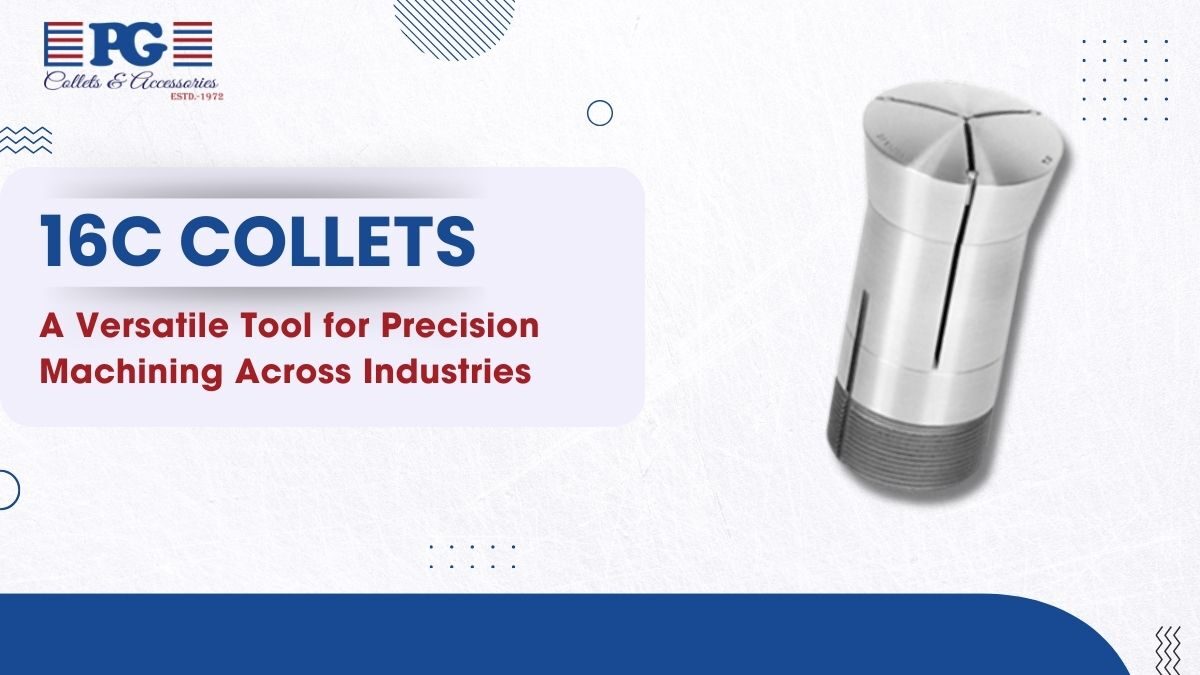
16C Collets: A Versatile Tool for Precision Machining Across Industries

16C collets are a type of collet chuck that is widely used in precision machining applications. They are known for their accuracy, versatility, and durability, making them a valuable asset for any machine shop. In this blog post, we will discuss the following:


  • What are 16C collets?
  • How do 16C collets work?
  • What are the benefits of using 16C collets?
  • What are some common applications for 16C collets?
  • How to choose the right 16C collet for your needs


What are 16C collets?

16C collets are a type of collet chuck that is designed to hold round workpieces with a high degree of accuracy. They are made from high-quality steel and are available in a variety of sizes to accommodate different workpiece diameters. 16C collets have a tapered shank that fits into a collet chuck, and they are tightened by a collet nut.

How do 16C collets work?

When a collet nut is tightened, it draws the collet cone up into the collet chuck. This causes the collet to grip the workpiece tightly and evenly. The tapered design of the collet ensures that the workpiece is centered and held securely.

What are the benefits of using 16C collets?

There are many benefits to using 16C collets in your machine shop. Some of the most notable benefits include:

  • Accuracy: 16C collets are known for their accuracy. They can hold workpieces to within 0.0001 inches of runout, making them ideal for precision machining applications.
  • Versatility: 16C collets are available in a wide range of sizes, making them suitable for a variety of different machining applications.
  • Durability: 16C collets are made from high-quality steel, making them durable and long-lasting.
  • Quick and easy to use: 16C collets are quick and easy to change, making them a time-saving option for busy machine shops.

What are some common applications for 16C collets?

16C collets are used in a wide variety of industries, including:

  • Aerospace: 16C collets are used to machine precision parts for aircraft and spacecraft.
  • Medical: 16C collets are used to machine delicate medical devices.
  • Automotive: 16C collets are used to machine parts for cars and trucks.
  • Electronics: 16C collets are used to machine small electronic components.

How to choose the right 16C collet for your needs

When choosing a 16C collet, it is important to consider the following factors:

  • The size of the workpiece: You will need to choose a collet that is the correct size for the workpiece you are machining.
  • The material of the workpiece: Some collets are designed for specific materials, such as aluminum or steel.
  • The accuracy requirements of the job: If you need to machine the workpiece to a high degree of accuracy, you will need to choose a collet that is known for its accuracy.
  • Your budget: 16C collets range in price from a few dollars to hundreds of dollars. It is important to choose a collet that is within your budget.

Once you have considered these factors, you can narrow down your choices and select the right 16C collet for your needs.

Conclusion

16C collets are a versatile and valuable tool for any machine shop. They offer a high degree of accuracy, versatility, and durability, making them ideal for a wide variety of machining applications. If you are looking for a collet chuck that can help you improve your productivity and accuracy, 16C collets are a great option.


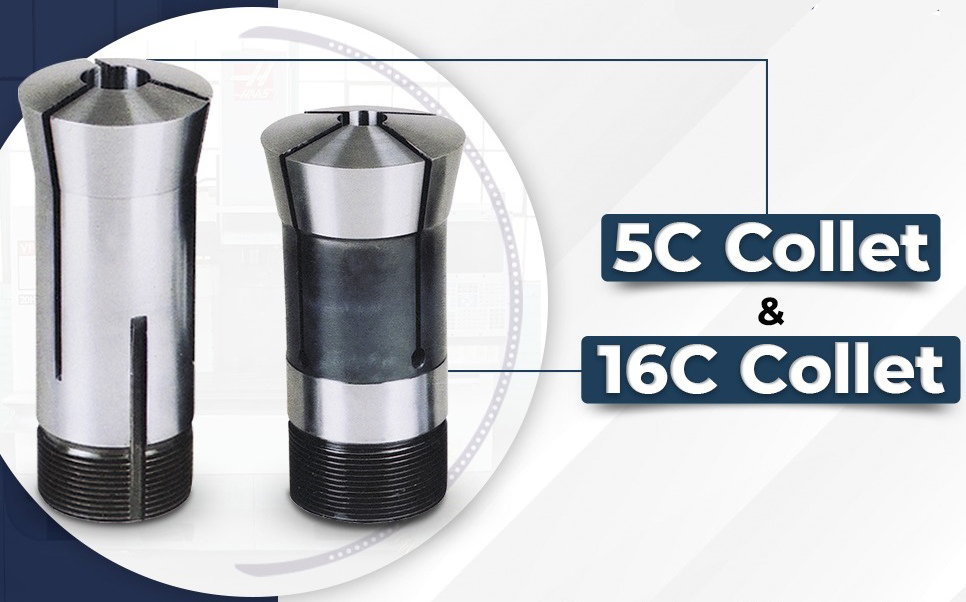
The Differences Between 5C Collets And 16C Collet

The wire, also recognized first as the number 2-3/16-10 threaded nose, seems to be the main distinction between both another 5C as well as some regular chucks. Process Chucks become compatible with that kind of thread. Such phase chucks being accessible in diameters ranging between 2” to 6” measures.


The understanding:

The 5C Collets Vs 16C Collet is that the ring which hooks it onto threaded nose including its collet chuck is needed for these phase chucks. The aim of all these strands is to completely cover each collet, allowing the user to operate their lathe over higher rpms without fear of both the holder going to launch open according towards the centrifugal pressure Step chucks also had the ID taper only at beginning of its loop, including regular collets that are using the 5C taper for cover this same collet.

Theseselections based are compatible with some Tools’ basic 5C collet installations and spindles, along with R8 or otherwise 5C installations from other suppliers. Every Tool component, including the basic reinforced and grounded 5C including R8 collets, were made to the very same top-quality specifications.

For all certain collets as well as collet drops, it will also provide a new flexible collet including the work – piece stop, which can be added to the Machine collet or even the collet nearby. Both 5C collet chucks, airflow collet chucks, precise spindles, including collet sensors accept 5C collets. Similar collets could also be found in 5C collet installations, 5C spindles, as well as other 5C products from many other suppliers.


The mechanism:

A conventional work holding mechanism comprising of even three-jaw control chuck, another mechanical actuating cylinder, including even the drawtube seems to be traditional on several lathes and spinning centres. The mechanical cylinder becomes connected to the device’s spindle’s lower part, whereas the chuck becomes attached to something like the spindle’s forward edge, or operating side.

The solid steel drawtube which goes through both moreover spindle bore is commonly used to link these 2 parts. The mechanical actuator’s motor shifts axially, which opens and shuts the chuck jaws. These are some of the 5C Collets Vs 16C Collet differences.


Various Purposes:

The drawtube shifts in the 5C Collets Vs 16C Collet in parallel with both the piston because it glides smoothly backwards and forwards, pushing a blade plunger inside the chuck frame. This plunger transforms linear motion with also radial motion, which opens and shuts the jaws.

The intensity of pressing force applied by jaws to something like the workpiece is equal to the cylinder electrical output, which can be conveniently controlled with the pressure release valve. A chuck works well with a standardized work holding mechanism for several popular changing purposes. It can carry a variety of contributions, rotates at a fair speed, which obtained high levels of accuracy, especially whenever the grips are drilled in place.


Our Other Products:


Enquire Now