

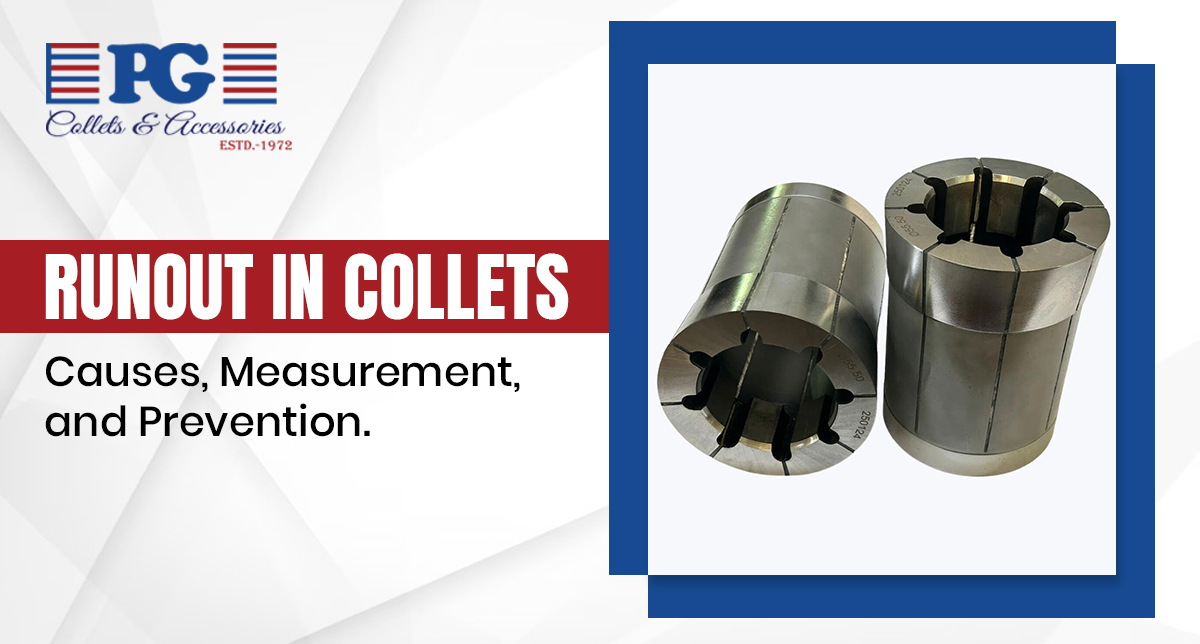
Precision machining depends heavily on workholding accuracy. Even the smallest deviation in tool alignment can affect surface finish, dimensional tolerance, and tool life. One of the most common accuracy challenges in machining systems is runout, especially when using collets in milling, drilling, and CNC operations. Understanding runout, its causes, and how to prevent it is essential for maintaining machining consistency and improving productivity.
In this guide, we’ll explain runout in detail, how it is measured, and what manufacturers and machinists can do to minimize it. With high-quality solutions from PG Collets, proper workholding accuracy becomes easier to achieve and maintain.
What Is Runout in Machining?
Runout refers to the deviation of a rotating tool from its true central axis. When a cutting tool spins unevenly, it creates vibration, uneven cutting pressure, and premature tool wear. In precision machining, even a few microns of runout can significantly impact performance.
High-quality collet are designed to hold tools concentrically inside the spindle or chuck, ensuring stable and accurate rotation. When runout occurs, it often indicates issues with the tool holder, spindle, contamination, or the workholding component itself.
Why Runout Matters in Machining Operations
Runout directly affects machining performance in several ways:
- Reduced tool life due to uneven load distribution
- Poor surface finish on machined parts
- Increased vibration and noise
- Inconsistent dimensional accuracy
- Higher machine maintenance costs
Using precision-engineered collets helps maintain concentricity and improves machining reliability across operations such as CNC milling, turning, and drilling.
Common Causes of Runout
Understanding the root causes of runout is the first step toward preventing it.
1. Worn or Damaged Tool Holders
Tool holders and collet can wear over time due to repeated clamping cycles. Even minor deformation can lead to alignment errors.
2. Dirt, Chips, or Coolant Residue
Contamination inside a collet or spindle taper is one of the most common reasons for runout. Tiny particles can prevent proper seating and alignment.
3. Incorrect Clamping Force
Over-tightening or under-tightening affects how securely collets grip the cutting tool, which can cause imbalance during rotation.
4. Poor Tool Quality or Bent Tools
Even with high-quality collets, a bent or low-precision cutting tool can introduce measurable runout.
5. Spindle Wear
Machine spindle bearings degrade over time, contributing to rotational inaccuracy even when using precision collets.
Types of Collets Used in Machining
Different machining applications require specific workholding solutions. Understanding the types of collets helps machinists select the right option for accuracy and durability.
Common categories include:
- ER collets
- R8 collets
- 5C collets
- TG collets
- Step collets
- Dead-length collets
Each of these collet types and sizes is designed for specific machines and tolerance requirements.
Types of Collet Chuck Systems
The chuck plays a major role in minimizing runout. Some widely used types of collet chuck systems include:
- ER collet chucks
- Hydraulic collet chucks
- Shrink-fit collet chucks
- Dead-length collet chucks
- Quick-change collet chucks
Precision-engineered collet paired with the correct chuck system significantly reduce vibration and improve machining stability.
How Runout Is Measured
Runout measurement is typically performed using a dial indicator. The process involves rotating the spindle slowly while checking deviation at the cutting tool or holder.
Basic Measurement Steps
- Insert the cutting tool into the collet.
- Secure the tool in the spindle.
- Position a dial indicator against the tool surface.
- Rotate the spindle manually.
- Record the total indicator reading (TIR).
High-precision machining typically requires runout below 10 microns, depending on the application. Premium-grade collet are manufactured to maintain tight tolerance control and reduce TIR values.
The Role of Collet Manufacturing in Runout Control
Runout performance depends greatly on collet manufacturing quality. Precision grinding, material selection, and heat treatment all contribute to dimensional stability.
The collet manufacturing process generally includes:
- Alloy steel selection
- CNC machining
- Precision grinding
- Slot cutting
- Heat treatment
- Surface finishing
- Quality inspection
High-accuracy collet produced through controlled manufacturing processes ensure consistent clamping force and concentricity.
How to Prevent Runout
Preventing runout requires a combination of proper maintenance, correct tool selection, and high-quality workholding components.
Clean All Contact Surfaces
Always clean the spindle taper, tool shank, and collet before installation.
Inspect Components Regularly
Check collet and tool holders for wear, cracks, or deformation.
Use Proper Torque
Follow manufacturer torque specifications to ensure collets clamp tools correctly.
Replace Worn Components
Old or damaged collets should be replaced to maintain machining accuracy.
Choose High-Precision Manufacturing
Selecting products from reliable manufacturers ensures consistent performance and reduced runout.
Benefits of Using High-Quality Collet
Investing in premium workholding solutions provides measurable advantages:
- Improved machining accuracy
- Longer tool life
- Reduced vibration
- Better surface finish
- Consistent production quality
Professionally engineered collets play a critical role in achieving repeatable machining results across industries such as automotive, aerospace, and tool manufacturing.
Conclusion
Runout is a small measurement with a big impact on machining performance. By understanding its causes, measurement methods, and prevention strategies, machinists can significantly improve productivity and tool life.
Choosing precision-engineered collet, maintaining clean equipment, and following proper installation practices are essential steps toward minimizing runout. Manufacturers that focus on quality materials, precision grinding, and strict inspection standards deliver the most reliable performance.
At PG Collets, precision and durability are at the core of every product. With advanced collet manufacturing process control and strict quality standards, PG Collets provides dependable solutions for modern machining environments.
FAQs
What is acceptable runout in machining?
Most precision machining applications require runout between 5–10 microns, depending on the tooling and material.
How often should collets be replaced?
Replacement depends on usage frequency, clamping pressure, and maintenance practices. Regular inspection helps determine when replacement is needed.
Can runout damage cutting tools?
Yes. Runout causes uneven cutting pressure, which can lead to premature tool wear or breakage.
Do all types of collets have the same accuracy?
No. Accuracy depends on manufacturing quality, material, and design tolerances.
How can I reduce runout quickly?
Clean the spindle taper, inspect the tool holder, verify torque settings, and use high-quality collets.