
PG Collets - Quality Collets Manufacturers and Exporters in India and Abroad
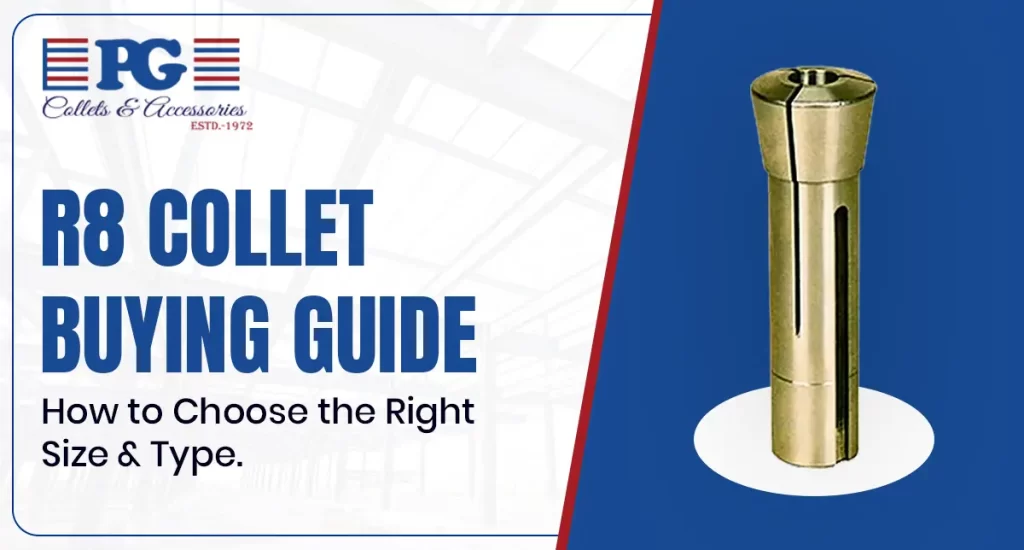
When it comes to precision machining, choosing the right tooling can make a significant difference in performance and accuracy. One such essential component is the r8 collet, widely used in milling machines for holding cutting tools securely. Whether you’re a beginner or a professional machinist, understanding how to choose the right size and type is crucial.
In this guide by PG Collets, we’ll break down everything you need to know—from basics to advanced considerations—so you can make an informed decision.
Before diving into selection criteria, it’s important to understand what is an r8 collet.
An r8 collet is a precision tool holder designed for milling machines, especially manual mills like Bridgeport. It fits directly into the spindle and holds cutting tools such as end mills and drills with high accuracy.
Unlike other collet systems, R8 collets are simple, cost-effective, and widely used in workshops due to their reliability.
Many users often ask what is a collet chuck and how it relates to collets.
A collet chuck is the holder that houses the collet and clamps it around the tool. In the case of R8, the collet itself fits into the spindle, so a separate chuck is not always required. However, in other systems like ER collets, a chuck plays a crucial role.
Understanding this difference helps you choose between different collet systems depending on your machine setup.
There are various collet types with pictures available in the market, each designed for specific applications:
Each collet type serves a unique purpose, so selecting the right one depends on your machine and application.
Selecting the right r8 collet is not just about size—it involves several critical factors:
The most important factor is matching the collet size to your tool shank. R8 collets are not as flexible as ER collets, so you need an exact size match.
Tip: Always choose a collet that exactly matches your tool diameter for maximum precision.
High-quality collets are made from hardened alloy steel. Premium brands like PG Collets ensure durability and consistent performance.
Low-quality materials can lead to:
Runout refers to how much the tool deviates from its axis while rotating. A good r8 collet should have minimal runout to ensure accurate machining.
Consider what you’re using the collet for:
Ensure your milling machine supports R8 taper. Not all machines are designed for it.
Understanding how an r8 collet compares with other collet systems helps you make better decisions.
| Feature | R8 Collet | 5C Collet | ER Collet |
| Machine Type | Milling | Lathe | Universal |
| Flexibility | Low | Medium | High |
| Accuracy | High | High | Very High |
| Tool Change | Moderate | Easy | Easy |
If you’re working specifically with milling machines, the r8 collet remains one of the best choices.
Even experienced machinists make mistakes when selecting collets. Here are some you should avoid:
When investing in precision tooling, quality matters. PG Collets offers:
This ensures that your machining operations remain smooth, accurate, and efficient.
To extend the life of your r8 collet, follow these simple practices:
Proper maintenance not only improves performance but also saves long-term costs.
An r8 collet is primarily used in milling machines to hold cutting tools like end mills and drills securely.
A collet chuck is a device that holds a collet and tightens it around a tool or workpiece for precision machining.
No, an r8 collet is designed for a specific size. Unlike ER collets, it does not have a wide clamping range.
A 5c collet is mainly used in lathes, while an r8 collet is used in milling machines.
Always match the collet size exactly with the tool shank diameter for best results.
Lathe collets are used to hold workpieces in a lathe with high precision and minimal vibration.
Choosing the right r8 collet is essential for achieving precision, efficiency, and durability in machining operations. By understanding different collet types, evaluating your requirements, and investing in quality products like those from PG Collets, you can significantly improve your machining results.
Instead of treating collets as a small accessory, consider them a critical component of your tooling system—because even the smallest detail can impact the final output.